
Yes, a jade bracelet can be worn most days. But “every day” should not mean 24 hours a day. Showering, sleeping, lifting weights and swimming create very different risks—and the part that fails first is often the elastic, clasp, plating or charm connection rather than the jade itself.
- Normal daytime wear: usually fine when the bracelet fits correctly.
- Shower, pool, hot tub or ocean: take it off.
- Gym, gardening and heavy housework: take it off before starting.
- Sleep: a close-fitting solid bangle may be comfortable, but bead, elastic, clasp and charm bracelets last longer when removed.
The useful question is not simply “can jade get wet?” Natural jade can be rinsed in clean water. The better question is whether the complete bracelet—stone, cord, metal, enamel, pearls, settings and all—can handle repeated moisture, chemicals, impact and tension.
Jade bracelet daily-wear rules at a glance
| Situation | Verdict | What matters |
|---|---|---|
| Office, shopping, walking | Wear it | A correct fit and normal awareness are usually enough. |
| Brief splash or hand-washing | Usually fine | Dry the bracelet, especially between beads and around metal parts. |
| Daily shower | Remove | Soap film, hot water, slippery tile and prolonged moisture add avoidable risk. |
| Sleeping | Depends | Construction, weight, projection and fit matter more than the stone name. |
| Gym, sports or manual work | Remove | Weights, handles, floors and equipment create impact and snagging risks. |
| Pool, hot tub or ocean | Remove | Chlorine, salt, sunscreen and wet hands are a bad combination. |
| Perfume, lotion or sanitizer | Apply first | Let skin products dry before putting the bracelet on. |
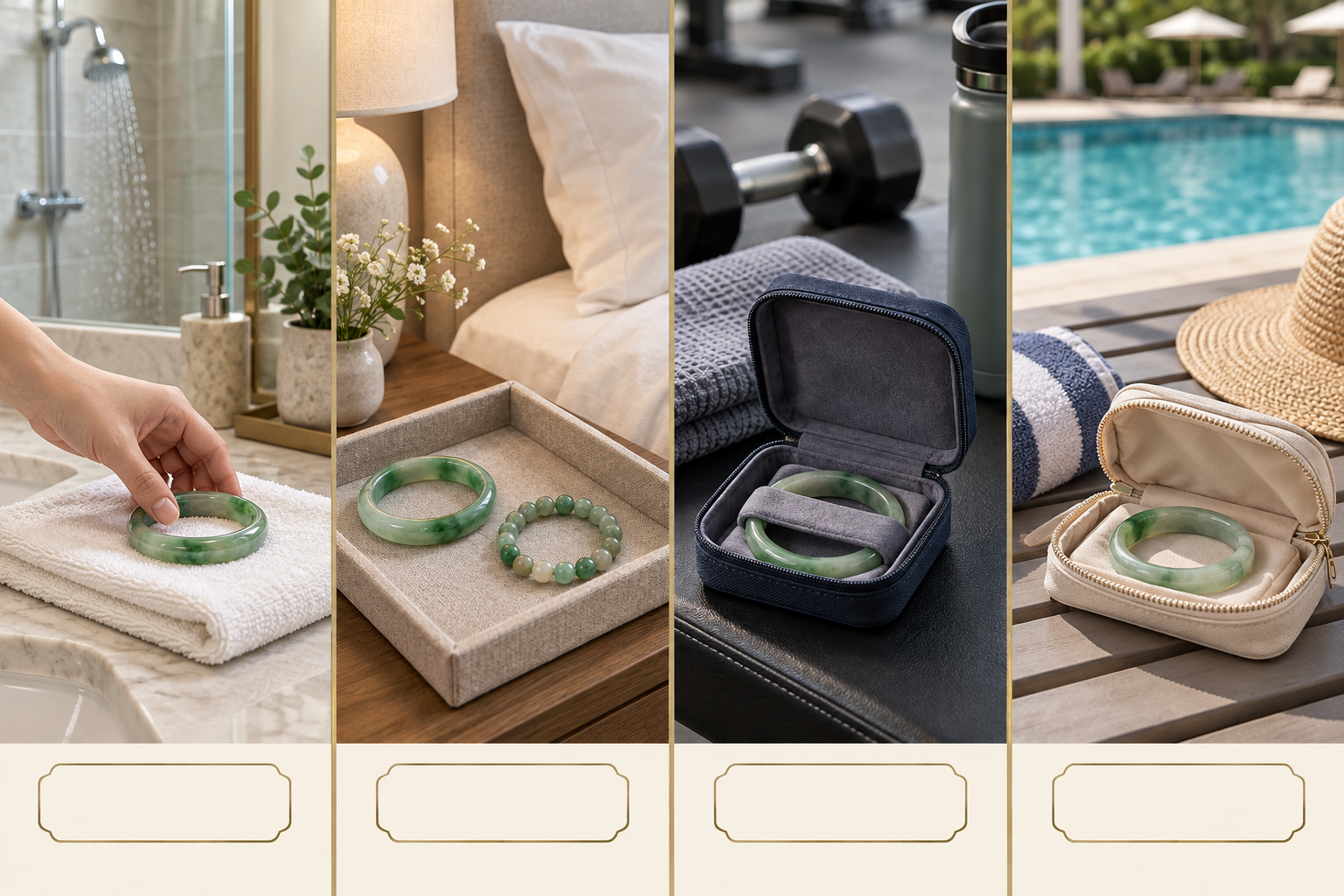
The habit is simple: take the bracelet off before the risky activity starts and place it somewhere soft, dry and secure—not loose on a sink, bench or locker shelf.
Can you shower with a jade bracelet?
Best practice: take it off before a shower. A brief rinse does not normally harm untreated jade, but a daily shower exposes the complete bracelet to shampoo, conditioner, body wash, oils, heat and moisture trapped around cords or fittings.
The physical risk is easier to overlook. A wet bangle or bead strand is harder to grip, and bathrooms are full of tile, porcelain and stone. Jade is exceptionally tough for a gemstone, but toughness does not make it immune to a sharp impact on a hard edge.
For bracelets with elastic, a clasp, gold-plated S925 parts, enamel, pearl details or a previous repair, the conservative answer is even clearer: remove first. If the bracelet gets wet, rinse away any soap with clean lukewarm water, blot it with a lint-free cloth and let it dry completely before storage.
Can you sleep with a jade bracelet?
A snug solid jade bangle may be comfortable for some people. Beaded and mixed-material bracelets are better removed. A close-fitting bangle has no clasp or cord to fatigue, and it sits nearer the wrist. A loose bangle, however, can strike a bed frame, wall or nightstand when you turn over.
Bead bracelets face a different problem. Sleeping places hours of uneven pressure on the strand. Elastic is repeatedly stretched and compressed, clasps can catch on bedding, charms can twist, and larger beads press into the wrist. The effect is not dramatic in one night; it is accumulated wear.
Weight matters too. A 5 mm bracelet weighing 8.50 g is less intrusive than a 9 × 10 mm strand weighing 34.92 g, even when both fit the same 15–17 cm wrist range. Our jade bracelet size guide explains why circumference alone does not predict comfort.
Can you wear a jade bracelet to the gym?
Take it off for weights, machines, floor exercises and contact sports. Gym equipment combines metal edges, hard handles, fast movement and wrist pressure. A bracelet can be trapped between your wrist and a bar, catch on a cable, or hit the floor when an elastic strand fails.
Jadeite and nephrite are both highly resistant to breaking, but each can still be scratched. The Gemological Institute of America places jadeite around 6.5–7 and nephrite around 6–6.5 on the Mohs hardness scale. That is durable enough for normal jewelry wear, not a reason to press polished beads against knurled steel.
Sweat is not the main threat to jade. The larger concern is residue around bead holes and hardware, plus repeated sanitizer, friction and impact. Put the bracelet in a padded pouch before entering the workout area rather than leaving it loose in a locker tray.
Can you swim with a jade bracelet?
No—remove it before entering a pool, hot tub, lake or ocean. The Jewelers of America care guidance recommends keeping fine jewelry away from chlorine and salt water. That advice becomes more important when a bracelet includes plated silver, cord, enamel, pearls or other accent stones.
Sunscreen also leaves a stubborn film, while cold water can make the hand temporarily smaller and a bracelet easier to lose. Around pools and beaches, wet hands meet concrete, tile, ladder rails and sand. Even if the jade itself survives the water, the complete piece may not come back in the same condition—or come back at all.
The bracelet construction changes the answer
Two bracelets can contain equally durable jade and still require different care. The safest routine is set by the most vulnerable component, not the hardest material.
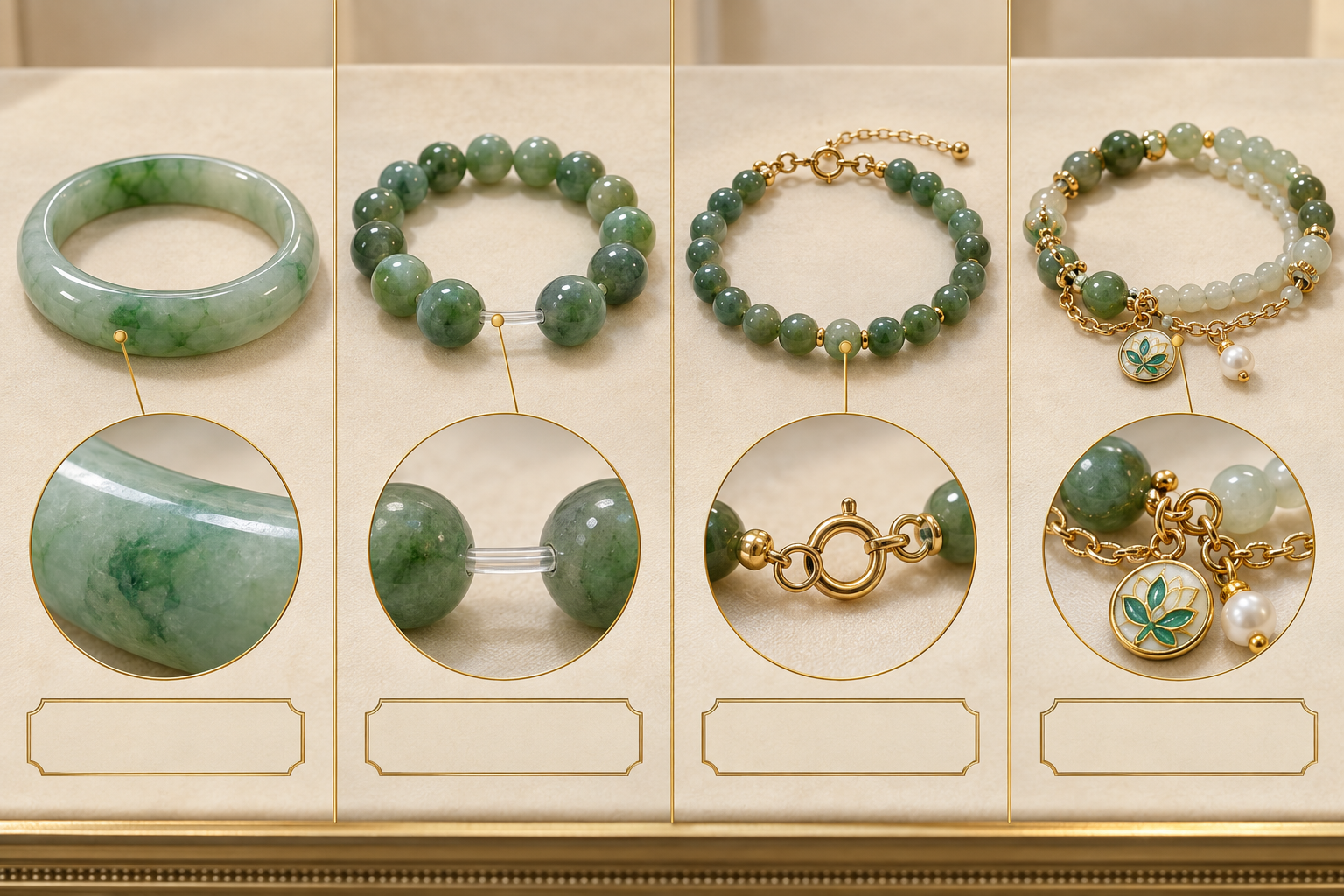
A solid bangle has no cord or clasp, while a mixed-material design may combine several care requirements. Look at the construction before deciding how continuously to wear it.
Solid jade bangle
A one-piece bangle is the simplest construction and often the best candidate for frequent wear. Its main concerns are fit, scratching and impact. “Solid” does not mean unbreakable: remove it for manual work and any activity where the wrist may meet a hard surface.
Elastic bead bracelet
The elastic—not the jade—sets the maintenance schedule. Moisture can sit inside bead holes, and repeated stretching eventually causes fatigue. Remove an elastic strand for sleep, water and exercise. Replace the cord when it looks cloudy, flattened or frayed, or when gaps appear between beads.
Clasp, chain and adjustable bracelets
Spring rings, extension chains and jump rings add useful adjustability but create more contact points. Plated silver can also change appearance after repeated exposure to sweat, sanitizer, perfume and moisture. Put skincare on first, allow it to dry, then fasten the bracelet.
Mixed-material bracelets
If jade is combined with pearl, lapis lazuli, enamel, amber, wood or adhesive-set details, use the care rule for the most delicate component. Do not assume that a cleaning method safe for jade is automatically safe for every accent.
How this advice applies to real bracelet designs
These examples use the listed construction, bead size and complete weight of four LuckJade pieces. They show why “jade is durable” is not a complete care instruction.
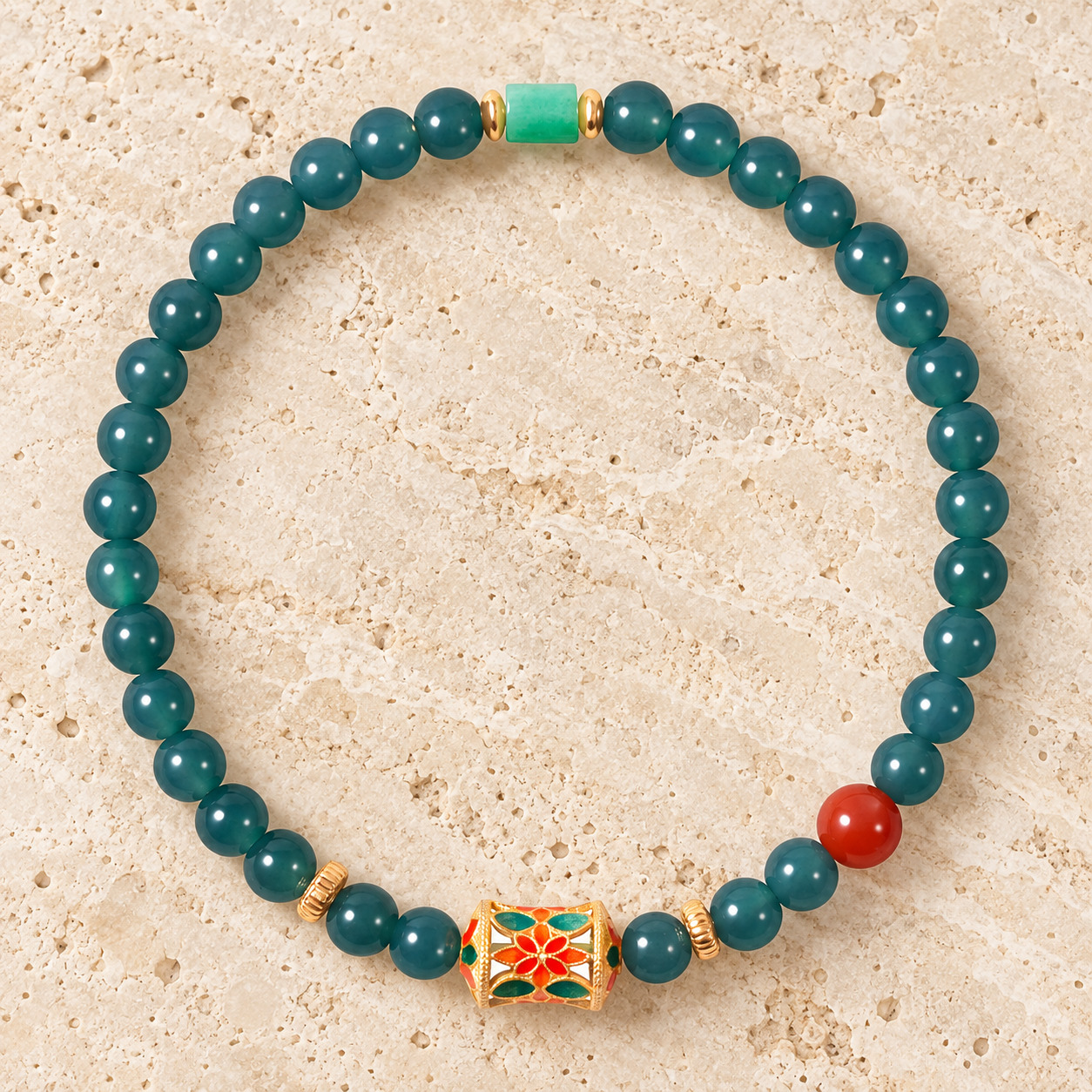
Blue Water Jadeite Bracelet
The lightest example here is comfortable for normal daytime wear, but its elastic strand, enamel centerpiece and plated silver details should stay out of the shower, pool and gym.
5 mm beads · 8.50 g · elastic · 15–17 cm wrist fit
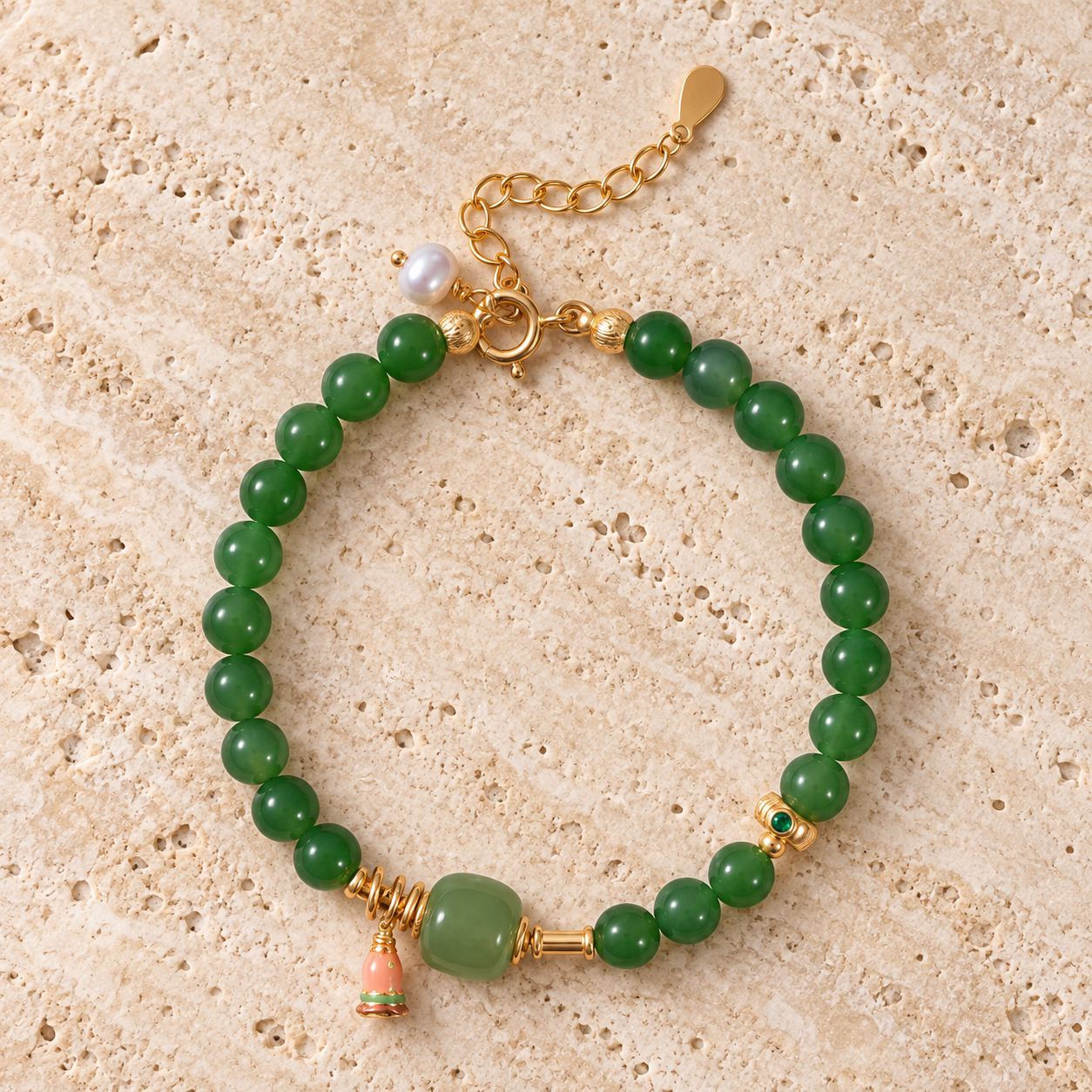
Green Hetian Jade Bracelet
The clasp and extension chain reduce repeated stretching, but the enamel charm, pearl detail, zircon accent and gold-plated S925 hardware make removal sensible for sleep, water and manual work.
6 mm beads · 13 g · spring-ring clasp · 15–17 cm wrist fit
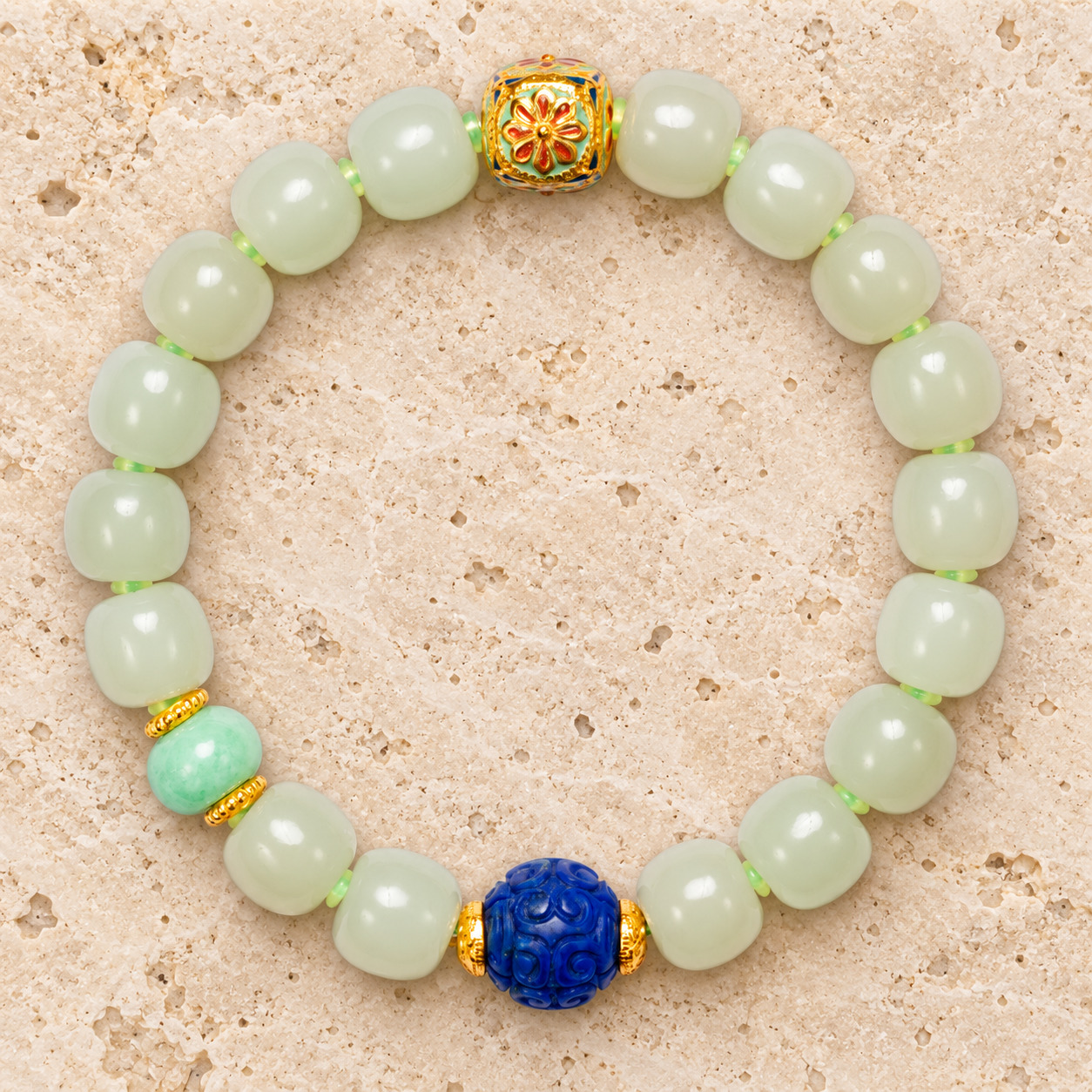
Hetian Jade, Lapis and Enamel Bracelet
Its larger old-style beads and carved lapis focal bead create more projection and movement. At 34.92 g, it is the clearest candidate for evening removal even though the jade itself is tough.
9 × 10 mm beads · 34.92 g · elastic · 15–17 cm wrist fit
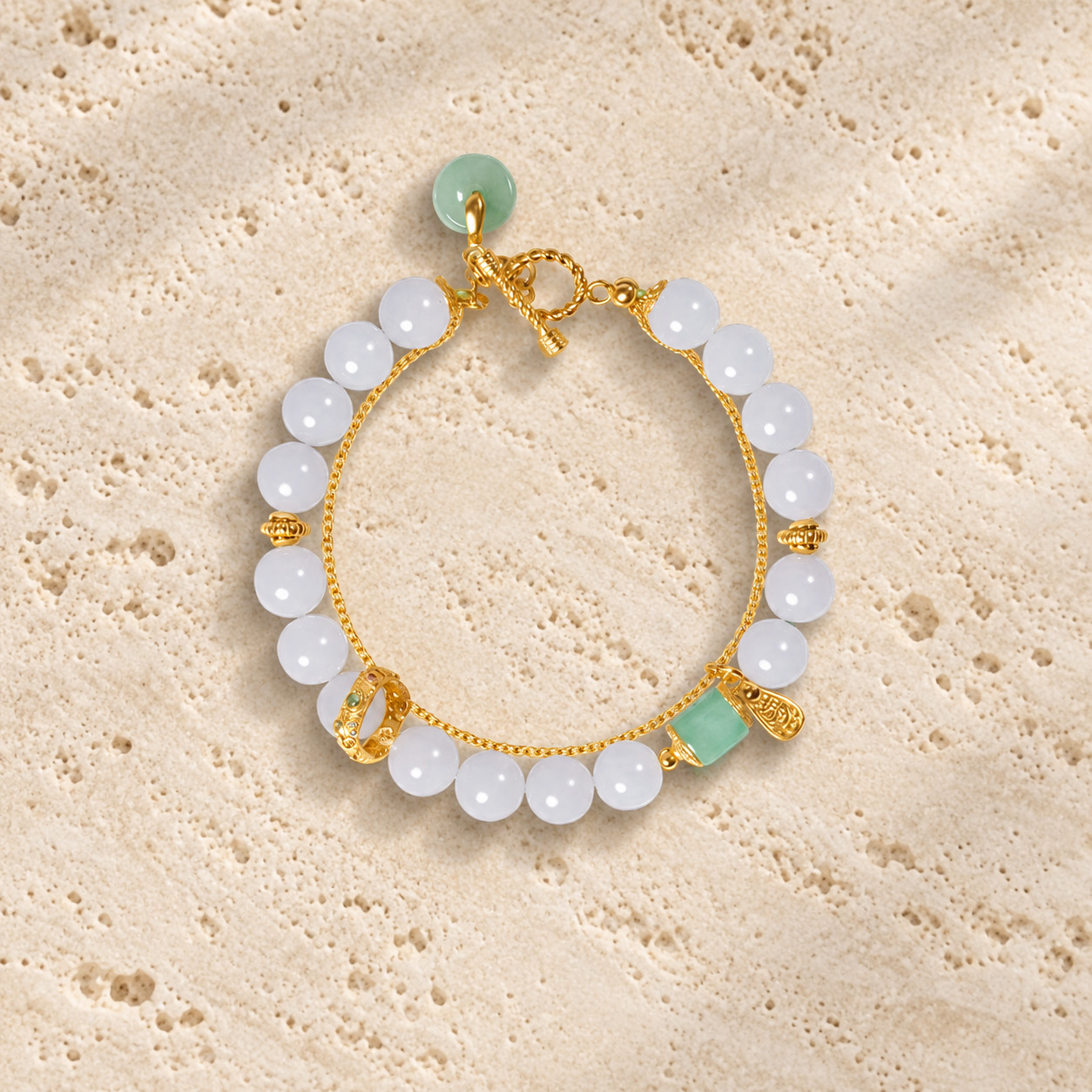
Lavender Jade Double-Layer Bracelet
The bead-and-chain design is intended to move. That gives it visual interest during the day, but also more opportunity to tangle or snag at night, during exercise or around towels.
8 mm beads · 20 g · double-layer clasp design · 15–17 cm wrist fit
If you are still deciding between jade types rather than constructions, see our jadeite vs nephrite bracelet comparison. Both can work for regular wear; the bracelet build and your routine usually make the bigger practical difference.
A simple daily routine that protects the bracelet
- Put it on last. Apply lotion, sunscreen, perfume and hair products first, then let them dry.
- Remove it before wet or manual activities. Use a fabric-lined tray or padded pouch rather than a sink edge or countertop.
- Wipe after wearing. A soft, clean microfiber cloth removes skin oil and surface residue before it builds up.
- Inspect the construction. Look for gaps between beads, cloudy elastic, fraying, a loose clasp, open jump ring or moving charm connection.
- Store it separately. Harder stones and metal jewelry can scratch a polished jade surface when pieces are piled together.
How to clean a frequently worn jade bracelet
The safest general method is lukewarm water, a small amount of mild soap and a soft cloth. The GIA jade care guide notes that untreated jade can tolerate more intensive cleaning, but also explains that jade may be dyed, bleached, impregnated, coated or otherwise treated. When treatment and construction are uncertain, gentle cleaning is the sensible default.
- Check for loose parts, cracks, stretched cord or open rings before adding water.
- Wipe the bracelet first; many pieces need nothing more.
- If necessary, dampen a soft cloth with lukewarm water and one small drop of mild soap.
- Clean the bead surfaces gently without soaking an elastic or mixed-material strand.
- Remove all soap with a second cloth dampened in clean water.
- Dry the surface and the spaces between beads, then air-dry completely before storage.
When to stop wearing it
Take the bracelet off and arrange professional inspection or restringing if you notice any of the following:
- A new visible crack, chip or line after an impact
- Elastic that has flattened, stretched, frayed or turned cloudy
- Gaps appearing between beads
- A clasp that no longer closes positively
- An open jump ring, loose charm or moving bead cap
- A sudden change in color, cloudiness or surface feel that gentle cleaning does not remove
Do not wait for an elastic strand to snap. Preventive restringing is cheaper and far less stressful than recovering beads from tile, pavement or a gym floor.
Frequently asked questions
Can you wear a jade bracelet every day?
Yes. Jadeite and nephrite are both tough enough for regular jewelry wear. Remove the bracelet for showering, swimming, exercise, heavy housework and any activity involving hard impacts. Construction matters: elastic, clasp, plated and mixed-material bracelets need more breaks than a close-fitting solid bangle.
Can jade get wet?
Brief contact with clean water is usually fine, and lukewarm water is part of gentle cleaning. Do not leave a complete bracelet damp, especially if it contains elastic, cord, plated silver, enamel, pearl, wood or adhesive-set details.
Can I shower with a jade bracelet?
It is better to remove it. Shower products leave residue, repeated hot water is unnecessary, and a slippery bracelet over tile or porcelain creates a serious impact risk.
Can I sleep with a jade bracelet?
A snug solid bangle may be comfortable for some wearers. Bead, elastic, clasp, charm and double-layer bracelets last longer when removed because sleep adds hours of pressure, twisting and snagging.
Can I work out while wearing jade?
No for weights, machines, floor exercises and contact sports. Store it in a padded pouch before the workout so it cannot strike equipment, catch on a cable or be compressed against the wrist.
Can I swim with a jade bracelet?
Remove it before pools, hot tubs and the ocean. Chlorine, salt, sunscreen, wet hands and hard poolside surfaces can affect the whole piece and increase the chance of loss.
Does sweat damage jade?
Normal sweat is unlikely to harm the jade itself, but it leaves residue and can affect cord, plating and hardware over time. Wipe the bracelet after wear and remove it before strenuous exercise.
Which wrist should I wear it on?
Either wrist is acceptable. From a care perspective, many people choose the non-dominant wrist because it meets fewer desks, door frames, tools and hard surfaces during the day.
Care basis: Material guidance was checked against the Gemological Institute of America’s jade care information and Jewelers of America’s general jewelry-care recommendations. Product-specific advice also considers the listed bead size, weight, closure and mixed materials of the examples above.
Compare bead size, weight, closure and wrist fit—not only jade color.
Jade bracelets for different daily-wear preferences