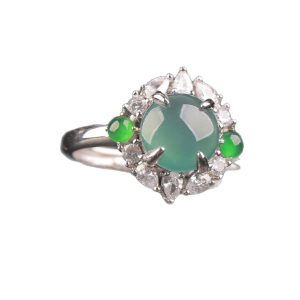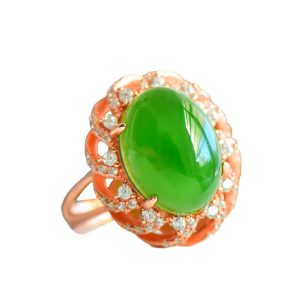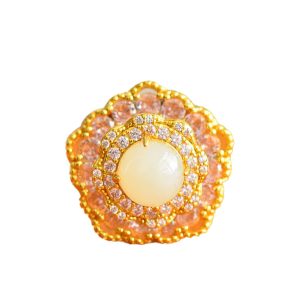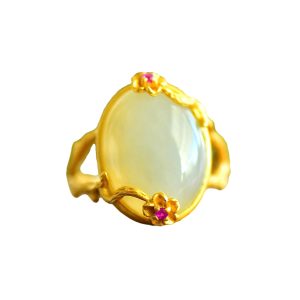
A green jade ring and a white jade ring can share the same stone size, setting and price yet look entirely different on the hand. Green creates a clearer color statement; white gives a quieter, lower-contrast effect. That visual difference matters—but it does not tell you whether the stone is jadeite or nephrite, whether it is treated, or whether one ring is automatically more valuable.
Choose a green jade ring when you want the stone to remain the visual focus from across a room. Choose a white jade ring when you want a neutral, luminous ring that works more like pearl, ivory or pale stone. For value, compare the exact material, treatment disclosure, transparency, texture, color distribution, dimensions and setting. “Green” and “white” are useful appearance descriptions—not quality grades.
Swipe sideways to compare the complete table.
| What changes | Green jade ring | White jade ring | What the color cannot prove |
|---|---|---|---|
| First visual impression | More obvious color contrast and a stronger focal point | Softer, quieter and easier to treat as a neutral | Mineral identity, natural color or treatment |
| Visible variation | Mottling, veins and color zones may be easier to notice | Cloudiness, warm or gray undertones and fine texture become important | Authenticity or geographic origin |
| Metal response | Silver looks crisp; yellow or rose gold adds warmth | Silver can feel cool and clean; gold can make white appear creamier | Whether the metal is solid, filled or plated |
| Meaning often associated with the color | Growth, renewal, prosperity and vitality | Calm, clarity, restraint and purity | A promised spiritual, medical or financial result |
| Best buying question | Is the color even, pleasingly varied or surface-concentrated? | Is it translucent white, creamy, gray-white or pale celadon? | Overall value without the remaining quality details |
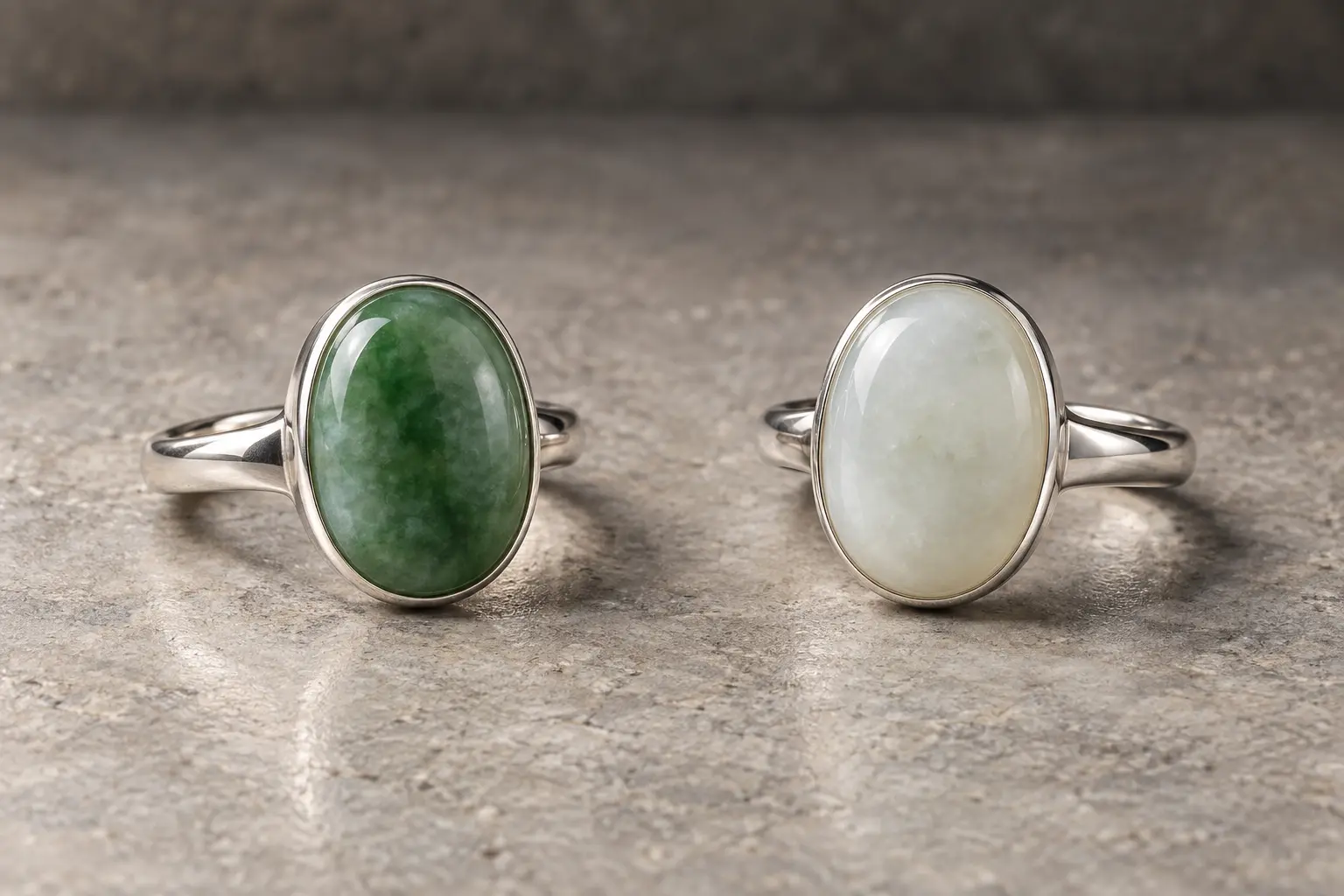
Green and white describe appearance—not the exact jade
Both jadeite and nephrite occur in green and pale or white material. A listing that says only “natural green jade” or “white jade” has not yet told you which jade it is. It also has not disclosed whether the color is natural, whether the material has been dyed or impregnated, or whether another green or white stone is being sold under a loose trade name.
If those details affect the price, ask the seller to name the material precisely. For jadeite, “Type A” is commonly used to describe jadeite that has not been acid-bleached, polymer-impregnated or dyed. It is a treatment description, not a promise of fine color, transparency or workmanship. The A/B/C terminology should not be casually transferred to nephrite.
A useful description separates the facts: stone identity, treatment, color, stone dimensions, metal, plating and adjustable size range. “Premium white jade gold ring” compresses several unanswered questions into one attractive phrase.
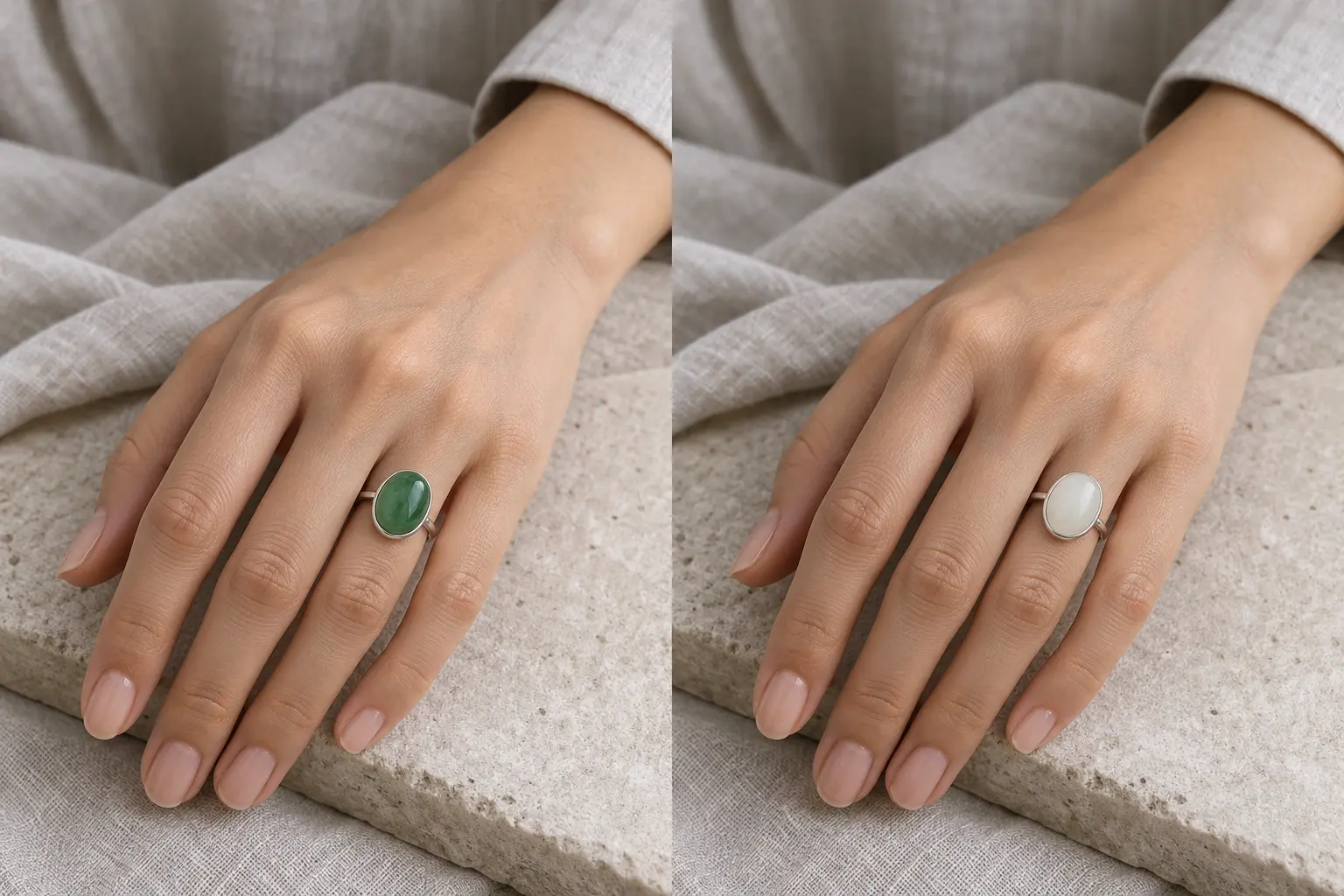
What actually looks different on the hand?
Green behaves like a visible color accent
Even a small green cabochon usually remains recognizable against skin, a white shirt or a dark sleeve. Medium and deep greens create stronger separation from the metal setting. Mottling and color concentration can add character, although strongly uneven color should be shown clearly rather than hidden by a dramatic photograph.
A green jade ring does not need to be vivid “imperial” green to work visually. Celadon, blue-green, moss green and gray-green can all be appealing. The useful question is whether the specific tone and pattern look intentional in the finished ring.
White behaves more like a neutral
White jade is rarely the flat paper white of a digital background. It may look creamy, cool gray, milky, faintly celadon or softly translucent. Those undertones become especially visible next to polished silver, warm yellow metal and the wearer’s skin.
Because the color contrast is lower, surface polish, translucency, texture and the outline of the setting carry more of the design. A white jade ring may look minimal in a plain bezel and decorative in a floral or halo setting without changing the stone itself.
Is a green jade ring more valuable than a white jade ring?
Not automatically. Fine vivid green jadeite can reach exceptional prices, which is why many buyers assume every green ring should cost more. But color is only one part of the comparison. Transparency, texture, fractures, color distribution, treatment, stone size, cutting, setting quality and documentation can reverse the result.
A translucent white jadeite cabochon with fine texture and an excellent polish can be more desirable than a dull, coarse or treated green stone. Fine white nephrite can also be valuable. Conversely, a strong natural green with good translucency and fine texture may justify a higher price than a comparable pale stone.
The safest conclusion is simple: green versus white does not establish value until the material and quality factors are comparable. When two rings use different stone sizes or different metals, their retail prices cannot be used as a direct color experiment.
Green jade ring meaning vs white jade ring meaning
Color meaning is one reason people search for a green jade ring versus a white jade ring, especially when choosing a gift. In many modern jewelry descriptions, green is associated with growth, renewal, vitality, prosperity and good fortune. White is often associated with calm, clarity, restraint, purity and a fresh beginning.
These are cultural and personal associations, not measurable powers. A thoughtful product page should explain symbolism without claiming that wearing a ring will produce health, wealth, protection or a particular life outcome.
Choose green for a symbolic gift
It suits a message about a new opportunity, growth, encouragement or prosperity. The visible color also makes the symbolism easier to explain when the gift is opened.
Choose white for a symbolic gift
It suits a message about calm, clarity, a new chapter or understated affection. Its neutral appearance may be easier when you do not know the recipient’s wardrobe.
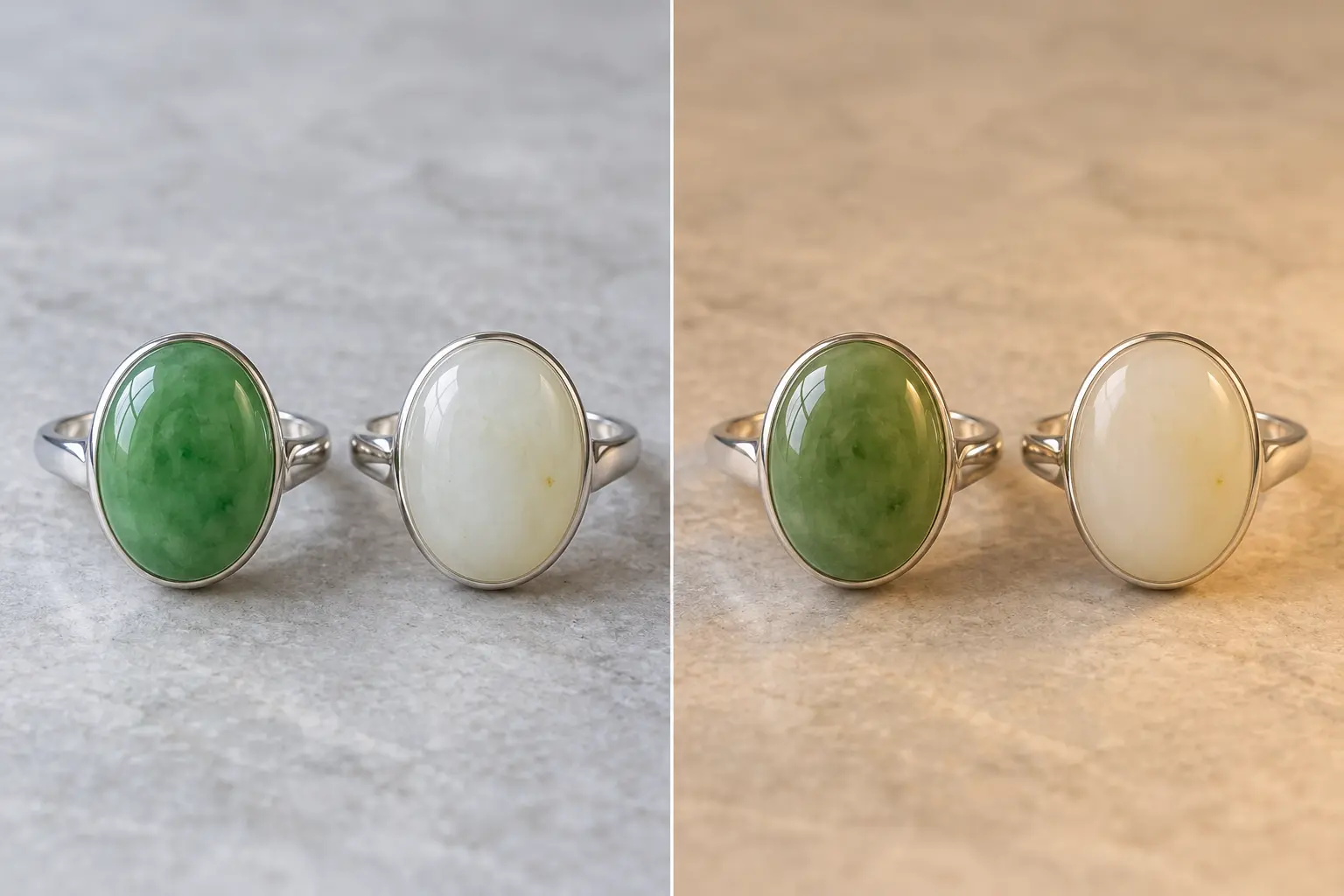
How lighting changes green and white jade
Neutral daylight is the best starting point for comparing color. Warm indoor light can make green appear more olive and can make white jade look creamier or slightly yellow. A cool phone screen or aggressive automatic white balance can move both colors in the opposite direction.
Should you pair green or white jade with gold or silver?
Metal changes the frame around the stone, so compare the complete ring rather than imagining the cabochon alone.
- Green jade with polished silver: creates a cooler, cleaner edge and often makes medium green look more distinct.
- Green jade with yellow or rose-gold plating: adds warmth and can make olive, moss and yellow-green undertones more noticeable.
- White jade with polished silver: emphasizes cool gray, icy or faint celadon undertones.
- White jade with yellow-gold plating: can make the stone appear creamier and gives a softer traditional contrast.
Metal color is an aesthetic choice. Metal description is a factual one. Sterling silver, gold-plated sterling silver and solid gold are not interchangeable terms. For a plated ring, look for the base metal and plating disclosure; plating will gradually show wear faster on a ring than on an earring because hands meet desks, handles, water and cleaning products throughout the day.
Which color is better for everyday wear?
Color does not determine durability. Construction and routine matter more. A low bezel protects the stone edge better than a tall exposed profile. A stable fit reduces spinning and knocks. Smooth shoulders are less likely to catch on clothing, while a decorative halo may need closer inspection for loose accent stones.
Green may hide a little residue or minor surface contrast more easily. White may show makeup, lotion or dirt around the setting sooner, which can be useful because it reminds you to clean the ring. That is a maintenance difference, not a weakness in white jade.
How to compare green and white jade rings online
- Confirm the exact material. Look for jadeite or nephrite, not only the word jade.
- Read the treatment disclosure. Do not assume “natural-looking” means untreated.
- Compare neutral-light photographs. White backgrounds and warm lamps can alter green and white differently.
- Request exact dimensions. Stone length × width, complete ring face, setting height and band width affect how the color reads on the hand.
- Inspect the side and back. Check stone support, prongs or bezel, soldering, open areas and whether the ring is adjustable.
- Read the metal description. S925, gold-plated S925, gold filled and solid gold describe different constructions.
- Check the return terms. Natural variation is normal, but the delivered stone should match the seller’s description and the type of photographs promised.
Choose a stated size range close to your finger. Adjust gently by holding the metal band—not the jade or halo—and avoid repeatedly opening and closing the ring. Repeated bending can fatigue the silver and loosen the setting.
Can color tell you whether a jade ring is real?
No. Green and white colors occur in genuine jade, imitation materials and treated stones. A cold touch, glass-scratch test, tapping sound, flashlight glow or online photograph cannot establish identity and treatment. Scratch and impact tests can damage the ring.
Use photographs to assess visible condition, color distribution and workmanship. Use precise disclosure and, when the price makes it important, a report from a qualified gemological laboratory to address material identity and treatment.
A practical decision: which jade ring should you choose?
Choose green when…
You want an obvious jade color, stronger contrast, visible natural variation or a gift connected with growth and prosperity.
Choose white when…
You want a softer neutral, an understated everyday ring, a creamy or cool luminous look, or symbolism connected with calm and clarity.
Pause when…
The listing uses only “real jade,” hides side and back views, gives no millimeter dimensions or does not identify the metal and plating.
Compare again when…
One option has a larger cabochon, taller setting or wider halo. Those measurable differences may be driving your preference more than color.
For construction, comfort and sizing, read how to choose a jade ring. You can also compare the current jade ring collection, including green, celadon and white adjustable designs.
Frequently asked questions
Is white jade real jade?
White material can be genuine jadeite or nephrite, but the color alone does not prove identity. Ask which material it is and whether treatments are disclosed.
Is green jade always more expensive than white jade?
No. Fine vivid green jadeite can be exceptionally valuable, but a specific ring must be judged by material, treatment, transparency, texture, fractures, size, cutting, setting and documentation.
Which jade ring color looks better with silver?
Silver gives green a crisp cool frame and can emphasize cool or faint celadon undertones in white jade. The better choice depends on the actual stone and the contrast you prefer.
Which jade ring is easier to give as a gift?
White is often easier to treat as a wardrobe neutral. Green gives a clearer jade identity and stronger symbolic message. An adjustable band helps with sizing, but it should still have a stated range.
Does white jade turn green?
Normal wear does not transform white jade into green jade. Apparent color changes are more likely to come from lighting, nearby colors, surface residue, photography or inaccurate white balance.
Can I wear a green or white jade ring every day?
Either can be worn regularly with sensible care. Choose a secure low setting, remove it for impact-heavy work and harsh chemicals, and clean it with warm soapy water and a soft cloth.
How should I photograph a jade ring before buying?
Ask for front, side and back views in neutral daylight, with a ruler or caliper reading for scale. A warm indoor view is useful as a second reference, not as the only color photograph.
Green jade makes color the focus; white jade makes texture, translucency, shape and metal more prominent. Pick the visual effect you will actually wear, then verify the material, treatment, measurements and construction. Color should guide the choice—not substitute for the facts.