The quickest way to buy the wrong bracelet size is to use the right wrist measurement for the wrong kind of bracelet. A chain bracelet, stretch-bead strand, open cuff, and solid bangle do not go on the hand in the same way, so they should not be sized with one blanket rule.
- Measure your bare wrist snugly at the point where you will wear the bracelet.
- Identify the construction before adding any extra room.
- For flexible bracelets, add about 0.5–2 cm according to the fit you want.
- For a closed bangle, measure around the compressed hand and check inner diameter instead.
This guide works for everyday chain bracelets, tennis bracelets, stretch beads, adjustable sliders, cuffs, solid bangles, and wrap styles. The jade examples later in the article show how bead size and weight change the feel after the basic size is right.
First, identify the bracelet type
Look at how the bracelet gets over your hand. That one detail tells you which measurement matters.
| Bracelet style | Measurement to use | What to check on the product page |
|---|---|---|
| Chain or tennis bracelet | Wrist circumference plus ease | Wearable length, including how the clasp closes |
| Stretch-bead bracelet | Wrist circumference plus comfort room | Recommended wrist range, bead size, and cord tension |
| Adjustable slider or extension chain | Wrist circumference | Minimum and maximum wearable length |
| Open cuff or hinged bangle | Wrist where it will sit | Inside width, opening, and maker’s fit notes |
| Closed solid bangle | Widest part of the compressed hand | Actual inner diameter |
| Wrap bracelet | Wrist circumference | Stated wrist range or intended number of wraps |
How to measure your wrist for a flexible bracelet
Use this method for chain, tennis, clasped, stretch-bead, and most adjustable bracelets.
- Use the wrist that will wear it. Left and right wrists can differ slightly. Remove your watch and any stacked jewelry first.
- Wrap a soft tape at the wrist bone. Keep it flat and snug against the skin. It should touch without digging in.
- Read the number without adding room. This is your wrist circumference, not your bracelet size yet.
- Measure once more. If the two readings differ, repeat the measurement rather than averaging a loose and a tight result.
No soft tape? Wrap non-stretch string or a narrow strip of paper around the wrist, mark the meeting point, then lay it against a ruler. Avoid elastic cord because it can stretch while you measure.
Worked example
16.0 cm wrist
For flexible bracelets only. Mark the overlap, lay the strip flat against a ruler, and then add ease. Use the product’s stated wrist range when available.
How much room should you add?
For a flexible bracelet, these numbers are useful starting points rather than an industry-wide law. Brands build clasps, beads, and links differently, so use the product’s own chart when it gives a specific wrist range.
| Fit preference | Add to the snug wrist measurement | What it should feel like |
|---|---|---|
| Close | About 0.5 cm / 0.2 in | Stays near one position; best for people who dislike sliding |
| Comfortable everyday | About 1–1.5 cm / 0.4–0.6 in | A little movement without repeatedly falling over the hand |
| Relaxed | About 1.5–2 cm / 0.6–0.8 in | More drape and movement; useful for a looser look |
For example, a 16 cm wrist usually starts around 16.5 cm for a close flexible fit, 17–17.5 cm for an everyday fit, or 17.5–18 cm for a relaxed fit. This example is for flexible bracelets only. It is not a closed-bangle chart.
If you are between two offered sizes, the larger size is usually the safer starting point—unless you know you prefer a close fit or the maker says the design runs loose.
How each bracelet style should feel
Chain and tennis bracelets
A chain or tennis bracelet should follow the wrist without pulling straight between the links. For an everyday fit, you should normally be able to slip a fingertip between the bracelet and the skin. If it turns constantly or drops into the palm, it is probably too long. Check whether the listed length includes the clasp, because that can change the usable measurement.
Stretch-bead bracelets
Elastic makes a bracelet easier to put on; it does not turn an undersized bracelet into the right size. On the wrist, the cord should not remain visibly stretched and the beads should not pinch. Roll the bracelet over the hand instead of pulling one small section of cord.
Large beads need special attention. A 10 mm strand occupies more inside space than a 5 mm strand with the same end-to-end length, so the larger bracelet can feel tighter even when both descriptions show the same nominal size.
Adjustable bracelets
For a slider or extension-chain bracelet, compare your preferred finished size with the usable adjustment range. Do not assume every link in a decorative extension can hold the clasp securely. If you plan to stack the bracelet above a watch, measure that exact point on the arm as well.
Open cuffs and hinged bangles
These styles open, so the wrist measurement is still relevant. They should sit securely without squeezing the wrist bones. Do not repeatedly bend an open cuff to fix the size; use the maker’s opening and inside-width guidance instead.
Wrap bracelets
A wrap bracelet is one finished multi-turn design. Its total strand length might be 50 cm or more, but that is not the wearer’s wrist size. Use the stated wrist range or wrap count and check whether the closure offers adjustment.
Closed bangles need a hand measurement
A solid bangle has no clasp and no opening. It must clear the widest part of your hand before it reaches the wrist, which is why wrist circumference alone can give the wrong answer.
- Bring the thumb across the palm as though you are about to slide on a bangle.
- Keep the fingers together and wrap a soft tape around the widest part of the knuckles and compressed thumb.
- Compare that hand circumference with the brand’s bangle chart and actual inner diameter.
For a quick estimate only, divide the hand circumference by 3.14, then compare the result with the product’s measured inner diameter.
Quick conversion
Hand loop → estimated diameter
Formula: hand circumference ÷ 3.14. This is a first estimate, not a universal size chart. Confirm the bangle’s measured inner diameter because oval shapes, wall thickness, and inner profiles change the fit.
Jade bead size changes the feel, not the wrist measurement
Once the bracelet length is right, bead diameter and weight decide whether it feels light, balanced, or substantial.
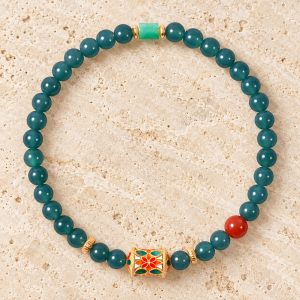
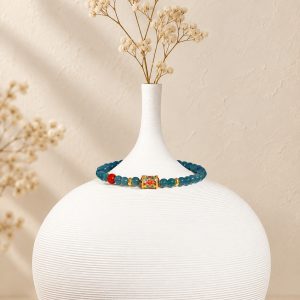
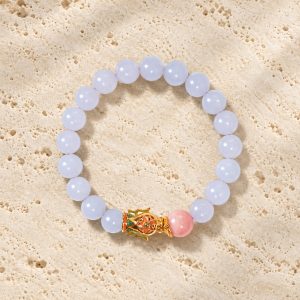
A 5–6 mm strand has a finer profile, works easily beside a watch, and is less noticeable while typing. The Blue Water Jadeite Bracelet with Nanhong and Enamel uses approximately 5 mm jadeite beads, weighs about 8.50 g, and is listed for 15–17 cm wrists.
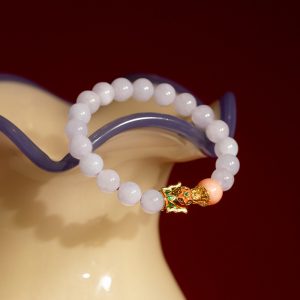
A 10 mm strand sits farther from the wrist and has much more visual and physical presence. The Lavender Jade Bead Bracelet with Rhodochrosite uses approximately 10 mm beads and weighs about 28 g. It has the same listed wrist range, but it will not feel like the smaller strand.
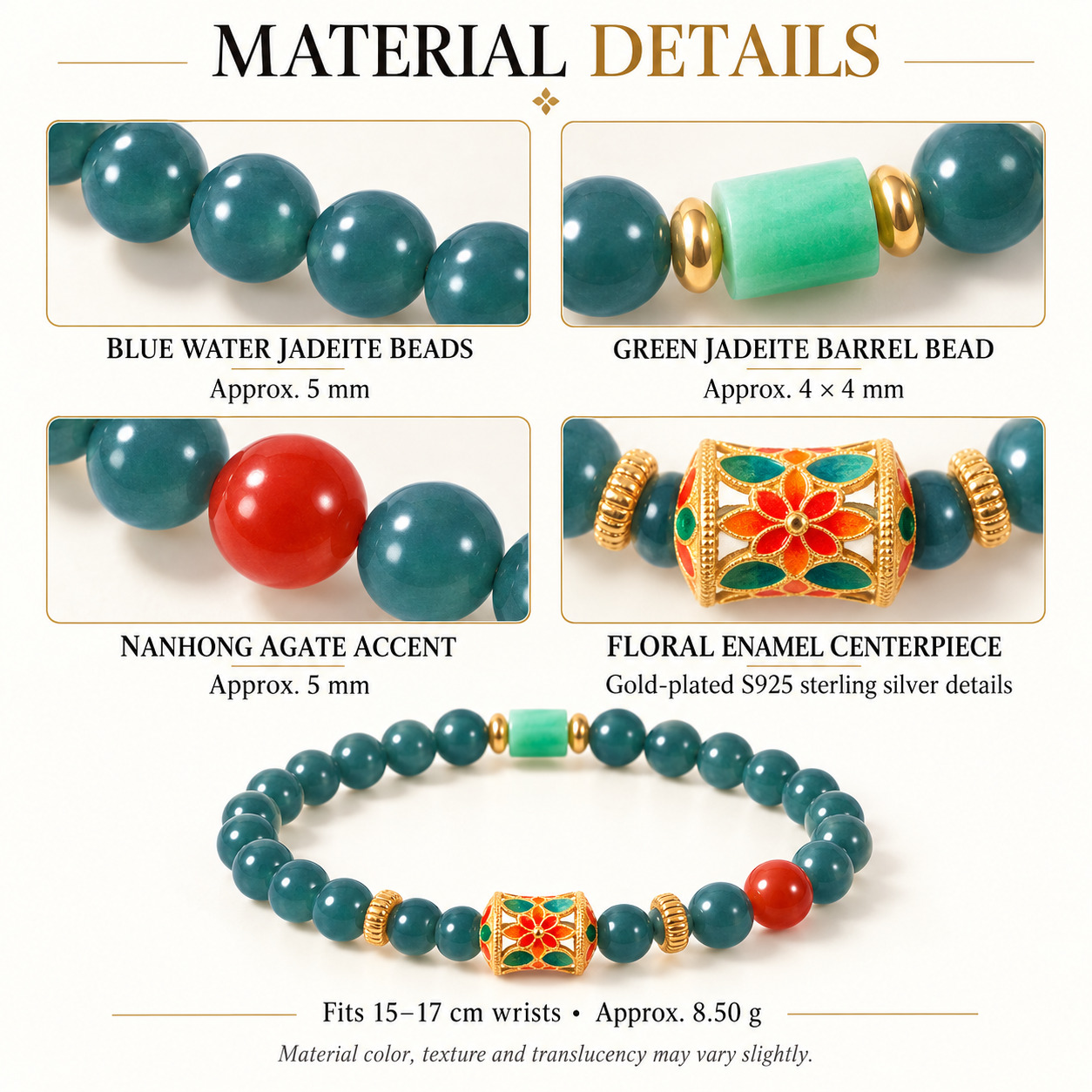
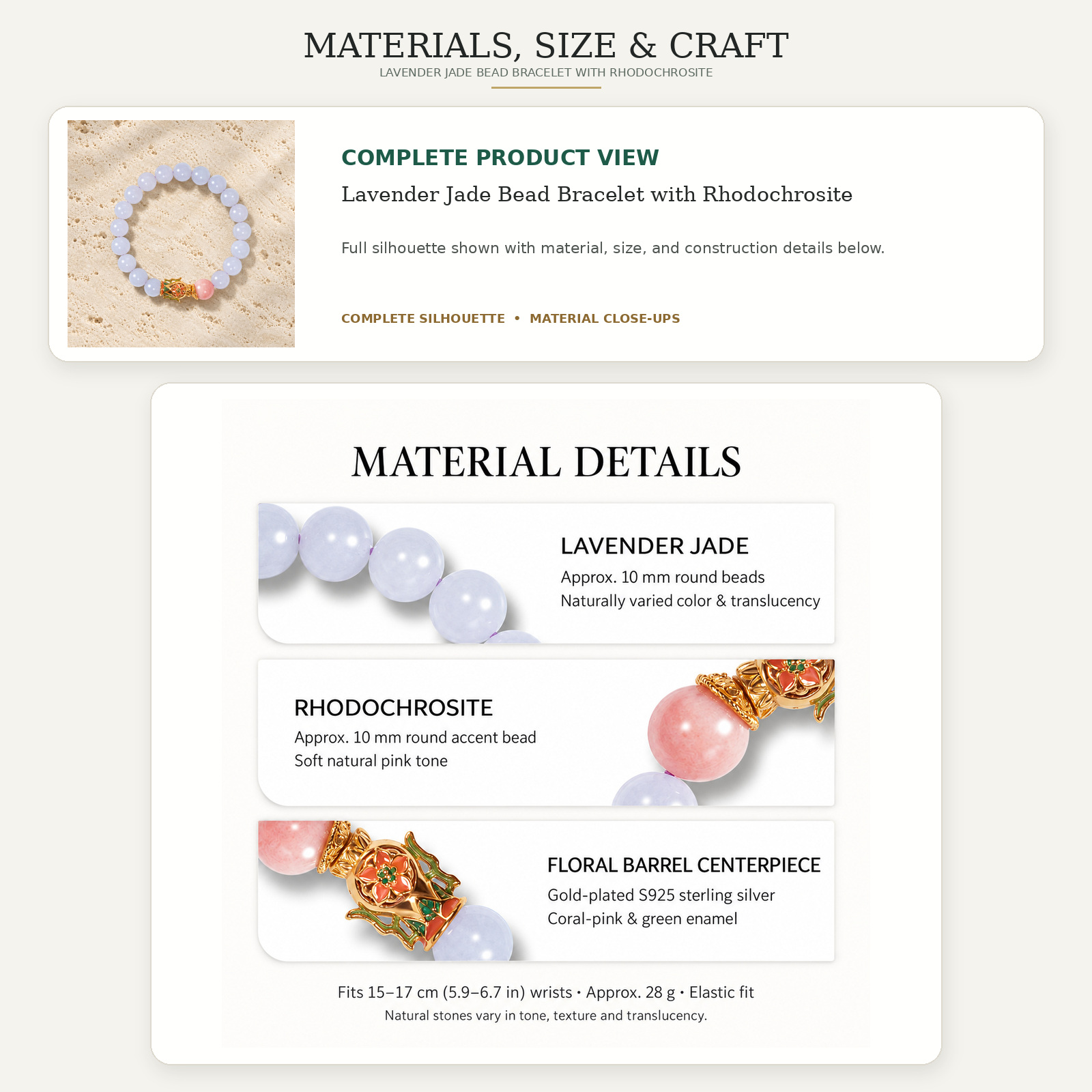
Neither bead size is better in general. For unobtrusive daily wear, smaller beads and lower weight are easier. If you want the bracelet to be the main piece of jewelry, a larger strand may suit you better.
LuckJade examples for 15–17 cm wrists
The table below is a product comparison, not a universal sizing chart. All six examples are listed for wrists around 15–17 cm (5.9–6.7 in), yet their bead size, weight, and construction make them feel very different.
| What you want | Product example | Construction and measurements | What you will notice |
|---|---|---|---|
| Light daily wear | Blue Water Jadeite with Nanhong | Elastic, 5 mm, 8.50 g | Fine beside a watch and unobtrusive at a desk |
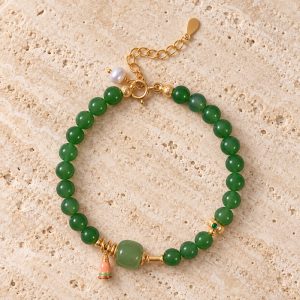
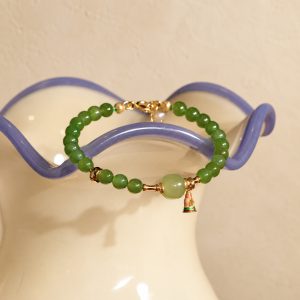
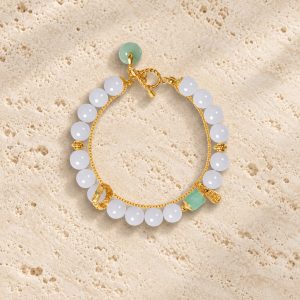
| Some adjustment | Green Hetian Jade with Enamel Charm | Clasp and extension, 6 mm, 13 g | More control over the finished length |
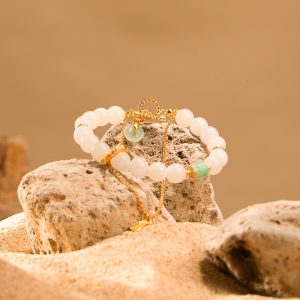
| A layered look | Lavender Jade Double-Layer | Clasped double layer, 8 mm, 20 g | A stacked look without two separate bracelets |
| A fuller jade presence | Lavender Jade with Rhodochrosite | Elastic, 10 mm, 28 g | Larger beads and more wrist presence |
| A substantial statement | Hetian Jade with Lapis Lazuli | Elastic, 9 × 10 mm, 34.92 g | Noticeable weight and stronger visual scale |
| A multi-turn design | Red Sandalwood Jade Wrap Bracelet | Wrap, 7 mm sandalwood, 33 g | Sized as a complete multi-wrap bracelet |
If your wrist falls outside a product’s stated range, ask about adjustment before ordering. Extra elastic stretch and the last extension link are not reliable substitutes for the right size.
Buying a bracelet as a gift
The most useful shortcut is a bracelet the recipient already wears comfortably. Measure its inside wearable length without stretching it and note whether it is a chain, elastic strand, cuff, or closed bangle. A chain measurement cannot be copied directly to a solid bangle.
If no measurement is available, an adjustable clasp or slider offers more margin than a close elastic fit. Style still matters: someone who wears a slim watch may enjoy a 5–6 mm strand, while someone who already wears bold bead jewelry may be comfortable with 9–10 mm beads.
Three checks when the bracelet arrives
- Wear it for ten minutes. It should not leave deep marks or visibly compress the skin.
- Type, reach, and bend the wrist normally. The bracelet should not fall into the palm or strike the hand every time you move.
- Take it off the way the design intends. A clasp should not require tension, an elastic strand should roll over the hand, and a bangle should pass the knuckles without force.
Comfort is the final test. A technically correct number is still the wrong size if you spend the day pushing the bracelet back up your arm or pulling it away from the skin.
Frequently asked questions
What bracelet size fits a 16 cm wrist?
For a flexible bracelet, start around 16.5 cm for a close fit, 17–17.5 cm for an everyday fit, or 17.5–18 cm for a relaxed fit. Then check the maker’s chart and the bracelet construction. Do not use those figures for a closed bangle.
Is bracelet length the same as wrist size?
No. Wrist size is the circumference of your body. Bracelet length is a product measurement, and thick beads, clasps, and multiple layers can reduce its usable inside space.
How tight should a chain or tennis bracelet be?
It should follow the wrist without pulling. For an everyday fit, a fingertip of space is a useful check. If it repeatedly turns or falls into the palm, it is likely too loose.
Should a stretch bracelet feel tight?
It should feel secure, not compressed. If the cord stays visibly stretched on the wrist or beads leave deep marks, choose more room.
How do I measure for a closed bangle?
Tuck the thumb toward the palm, keep the fingers together, and measure around the widest part of the knuckles and thumb. Use that number with the brand’s inner-diameter chart.
What should I do if I am between sizes?
For most flexible bracelets, choose the larger option unless you prefer a deliberately close fit. For a solid bangle, use the maker’s chart because a few millimeters can decide whether it passes over the hand.
Are 10 mm jade beads too large for a small wrist?
Not automatically. The inside fit comes from the finished bracelet circumference; 10 mm beads simply look fuller and occupy more inside space than 5 mm beads. Check wrist range and total weight together.
Before you choose
Measure first, identify the construction, and then decide how much movement you want. On the product page, look for wearable length or wrist range, bead or band thickness, total weight, and the type of closure. Those details tell you far more than a generic small, medium, or large label.
Browse the LuckJade jade bracelet collection to compare current measurements and construction. If the size is settled and you want help with color or style, read How to Choose a Jade Bracelet.
Compare four jade bracelet styles
These four show how the same general wrist range can feel different in a fine elastic strand, an adjustable clasp, a fuller 10 mm bead, and a double-layer design.