A 10 mm jade stud and a 17 mm jade disc can both fill an online product photograph. On the ear, they do not read the same at all. The useful numbers are the front size, the complete drop, the pair weight and the fastening—not how large the earring looks on a screen.
For a compact on-ear look, start around 8–10 mm; for a clearly visible everyday stud, compare 11–14 mm; at 15–18 mm, the front becomes a deliberate feature. A 25–40 mm drop usually stays near the jaw, while 70–80 mm is statement length. These are visual bands, not rules: the wearer’s ear, hairstyle, setting, weight and backing change the result.
This guide uses millimeters because they remain stable when product photographs, browser windows and zoom levels do not. It also uses four current LuckJade examples with published measurements. The aim is not to declare one size “best.” It is to help you picture the piece before it arrives.
First, identify which measurement the listing gives
“12 mm jade earrings” may describe the stone alone, the complete metal-and-stone front, or the diameter of a bead used in a longer drop. Those are three different facts. Before comparing two pairs, check that the numbers refer to the same part.
Stone size
The visible jade cabochon, bead or disc only. A surrounding frame, prongs or scrollwork can make the finished earring wider.
Overall size
The complete front measured from outer edge to outer edge. This is usually the more useful number for a stud.
Total drop
The distance from the top fitting to the lowest point—not merely the length of the jade component.
Pair weight normally means both earrings together. Do not compare a 5 g pair with a listing that gives 5 g for one earring. When a pair is asymmetrical, the two individual weights may not be equal.
What 10 mm, 12 mm, 14 mm and 17 mm look like on an ear
Diameter changes faster than it sounds. A 17 mm circular front is only 7 mm wider than a 10 mm front, but its visible face area is almost three times as large. That is why a few millimeters can move a stud from quiet to prominent.
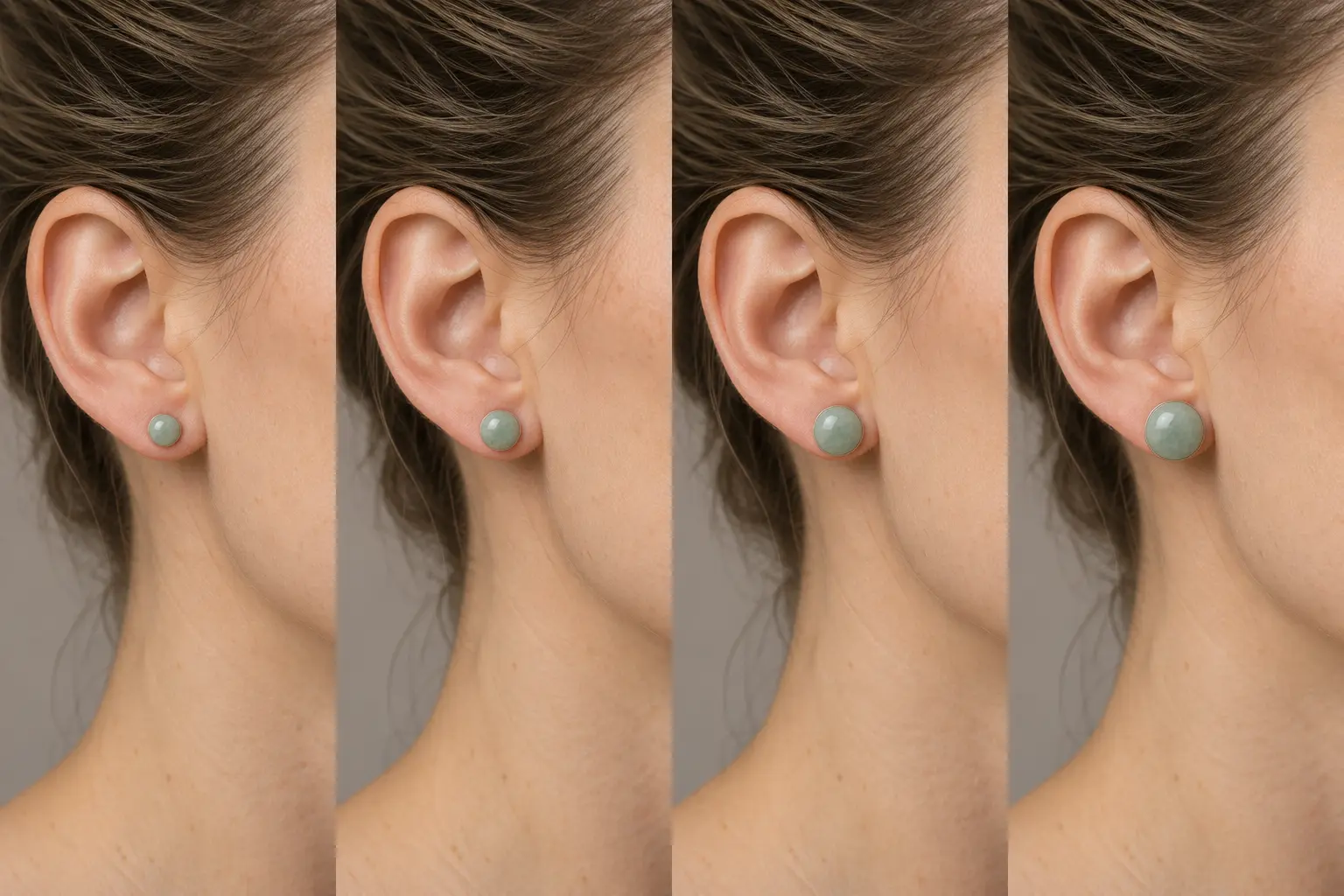
A practical way to read the front size
- 8–10 mm: usually reads as compact and close to the lobe. It is easier to combine with glasses, high collars and other jewelry.
- 11–14 mm: clearly shows the jade color while remaining within a common everyday scale.
- 15–18 mm: occupies more of the lobe and should be treated as a visible design element, especially when framed by metal.
Shape matters too. A 14 × 10 mm oval appears narrower than a 14 mm circle. A pierced 17 mm disc may look visually lighter than a solid 17 mm cabochon because the open center and thinner profile reduce mass.
Drop length changes where the eye stops
For drops, the important number is the complete length from the top fitting to the lowest point. A seller may also list a 12 mm jade bead, but that does not tell you whether the finished earring stops at 25 mm or 80 mm.
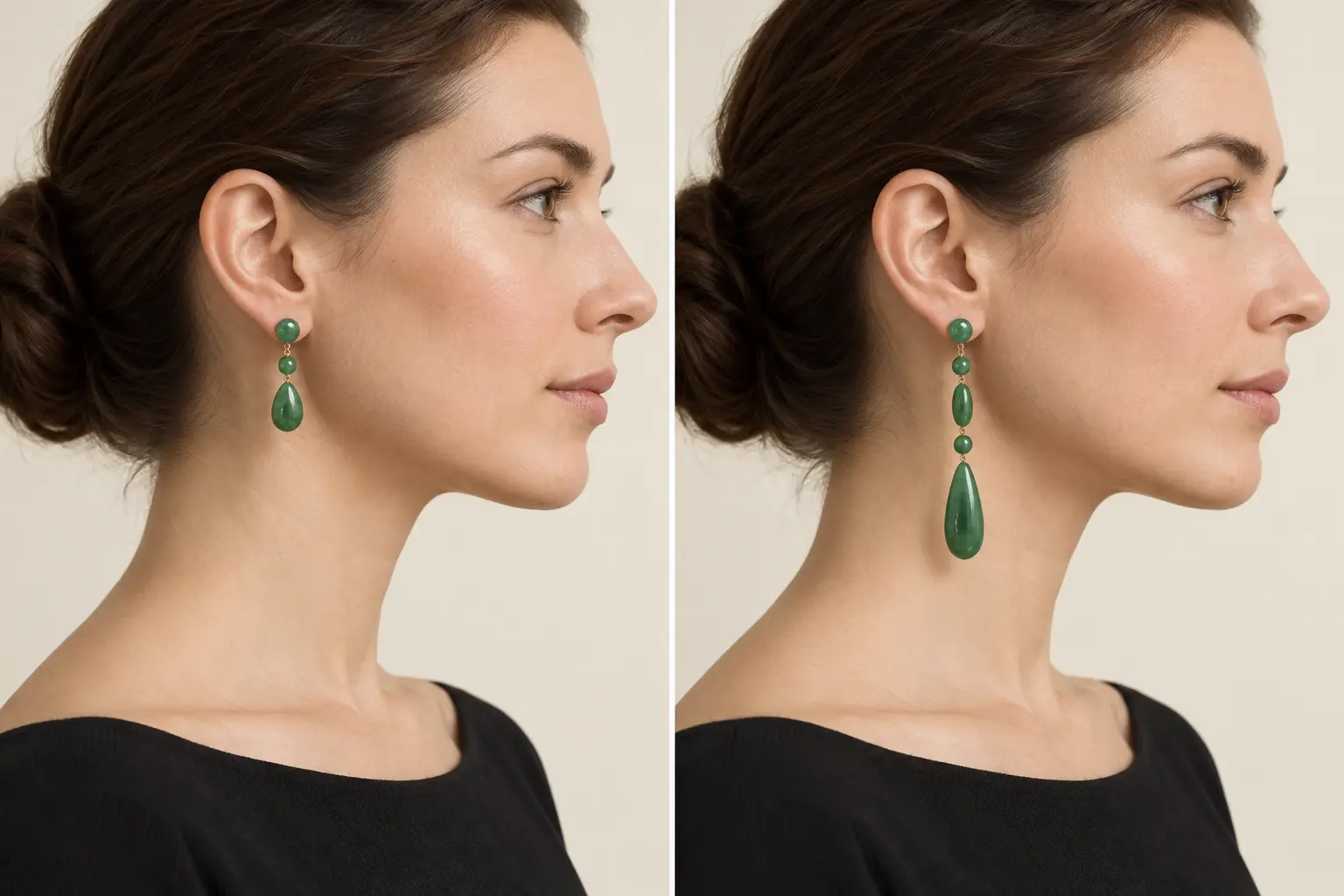
| Total drop | Typical visual effect | Check before buying |
|---|---|---|
| Up to 25 mm | Short movement close to the lobe | Whether the measurement includes the hook or hoop |
| 25–40 mm | Moderate drop; often stays near the jaw area | Pair weight and whether the lowest element swings freely |
| 50–65 mm | Clearly visible with most hairstyles | Hair and collar contact, balance and fastening |
| 70–80 mm+ | Long statement proportion | Neckline, movement, asymmetry and storage |
Four real examples using current product measurements
The following figures come from the current LuckJade product descriptions. They show why the same category can contain very different proportions. Pair weight means both earrings together.
Swipe sideways to compare all columns →
| Example | Front element | Complete size | Pair weight | Fastening |
|---|---|---|---|---|
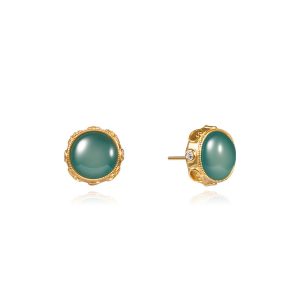
| Blue-Green Ruyi Studs | 10 mm jade cabochon | 13 × 13 mm overall | 5 g | Straight stud posts |
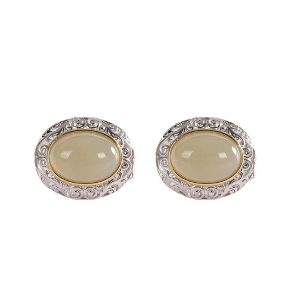
| Pale Green Oval Studs | Oval jade cabochon | 14 × 10 mm overall | 7.4 g | Post with hinged omega-back support |
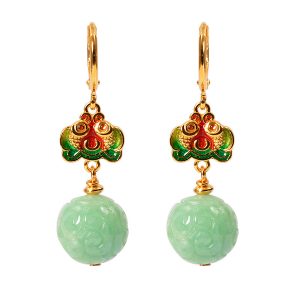
| Double-Koi Jadeite Drops | 12 mm jadeite bead | 40 mm total drop | 9.23 g | Hinged hoop |
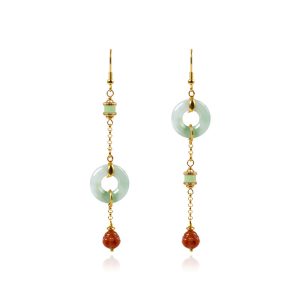
| Asymmetrical Jade Disc Drops | 17 mm jade discs | 80 mm total drop | 8.85 g | See product photographs and listing |
Notice that the 80 mm asymmetrical pair has a slightly lower stated pair weight than the 40 mm Double-Koi pair. Length alone does not determine weight. Thickness, metal components, stone volume and open construction all matter.
How to measure a listing correctly
Good measurements answer three separate questions. How much do both earrings weigh? How wide is the complete front? How far does the finished drop extend? Each requires a different tool and reference point.
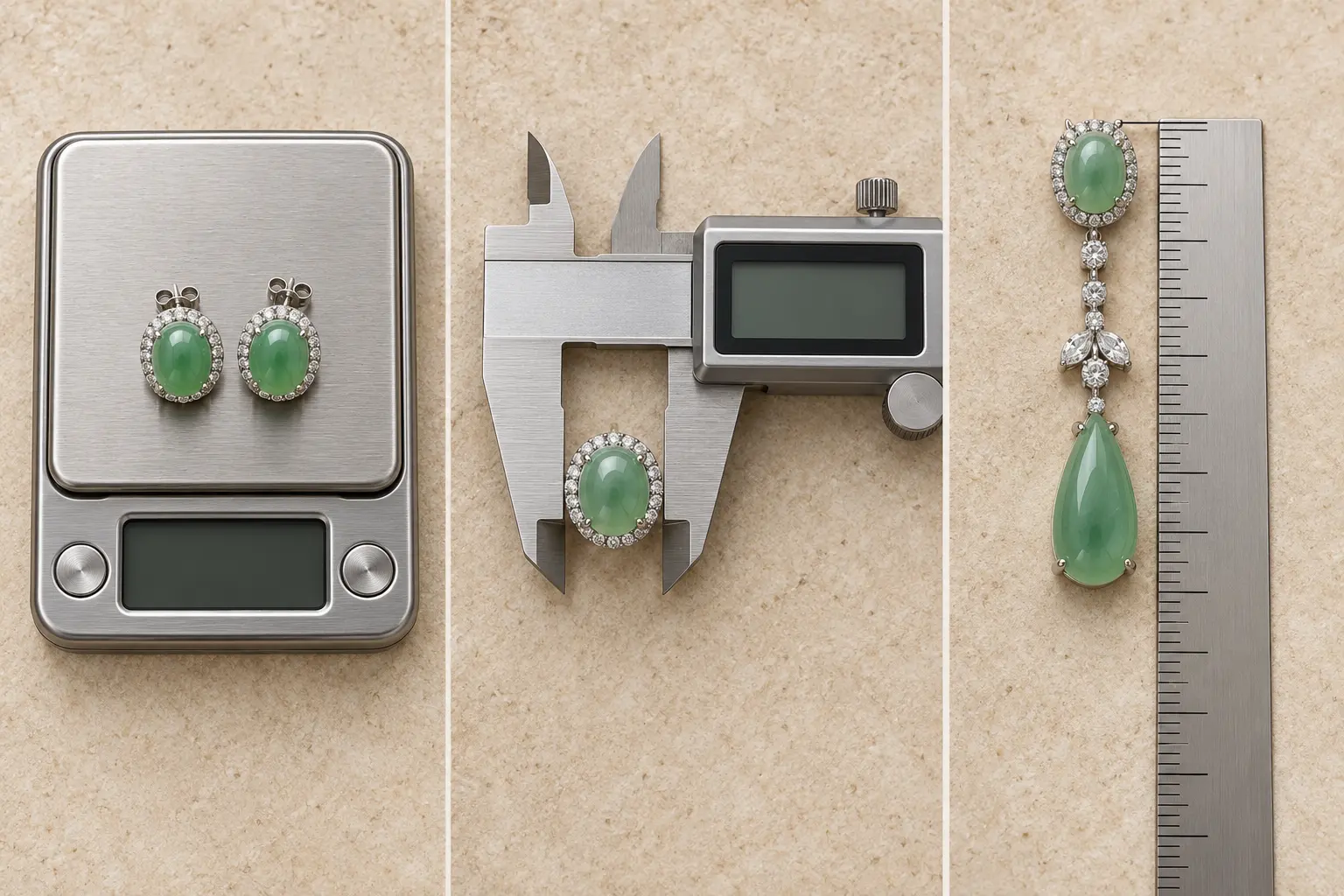
Pair weight is useful, but it does not predict comfort by itself
For a symmetrical pair, dividing the pair weight by two gives a rough per-ear figure: a 5 g pair is approximately 2.5 g per earring, and a 7.4 g pair is approximately 3.7 g per earring. That arithmetic should not be used for an asymmetrical pair unless the two pieces have been weighed separately.
Even equal weights can feel different. A broad omega back may support a larger stud differently from a small friction back. A moving drop can distribute mass below the lobe, while a front-heavy stud may tip forward. Piercing position and lobe structure matter too. Treat weight as one comparison point, not a comfort guarantee.
Do the paper-and-thread test before ordering
You can preview scale at home without an earring try-on tool. This test takes five minutes and is more reliable than enlarging a product photograph.
- Make paper fronts. Draw circles measuring 10, 12, 14 and 17 mm across. Cut them out and hold them against the lobe with skin-safe tape beside—not over—the piercing.
- Make length guides. Cut two pieces of thread at 40 and 80 mm. Hold the top at the piercing position and let each hang naturally.
- Check two viewing distances. Look close in the mirror, then step back to normal conversation distance. Earrings are usually seen from farther away than product pages suggest.
- Add hair and glasses. Repeat the check with the hairstyle, glasses and collar the wearer uses most often.
- Compare an existing pair. Measure a pair she already wears comfortably. A familiar reference is more useful than an abstract “small” or “large” label.
Use paper only. The purpose is to judge visible area and length—not to simulate weight or fastening. If comfort is uncertain, keep the return option available.
Choose by routine, not by age
Age is a poor sizing shortcut. Some women in their twenties want almost invisible studs; some in their seventies wear long architectural drops. Better questions are whether the wearer uses glasses, keeps her hair over the ears, prefers light movement, handles small backs easily, and already wears visible jewelry.
- Frequent glasses or large frames: compact fronts and controlled drops reduce visual competition near the temple.
- Hair usually worn down: a larger front or longer drop may remain visible, but check whether moving parts catch in hair.
- High collars and scarves: studs or shorter drops are less likely to touch fabric.
- Statement-jewelry wardrobe: 17 mm fronts and 70–80 mm drops can feel proportionate rather than excessive.
- Uncertain gift choice: begin near the measurements of earrings she already owns and keep the exchange route simple.
What a useful product page should tell you
Before ordering jade earrings online, look for an actual millimeter measurement rather than “small,” “medium” or “statement.” The listing should also distinguish stone size from overall size, state whether weight is per piece or per pair, identify the closure, describe the metal and plating, and explain whether natural color variation means the shipped pair may differ from the photograph.
If a listing shows only enlarged studio photographs, ask for a ruler image or an on-ear photograph taken without dramatic perspective. For high-value jade, measurements support a decision; they do not establish authenticity. Stone identity and treatment require appropriate documentation and, when necessary, laboratory testing.
For the broader buying process, read how to choose jade earrings. Once the size range is clear, the jade earrings and face-shape guide explains how front width and drop direction affect visual balance. If the pair is a present, the jade earrings gift guide for Mom adds fastening, materials and return checks. You can also compare the current jade earring collection.
Frequently asked questions
What size jade stud is suitable for everyday wear?
Many people find 8–14 mm fronts easy to integrate into daily clothing, but there is no universal size. Compare the complete front—not only the stone—and use an existing comfortable pair as the reference.
Is a 17 mm jade earring large?
A 17 mm front is visually prominent on most lobes, especially when it is a solid circular cabochon. A thin jade disc with an open center may appear lighter. Make a 17 mm paper circle and view it from conversation distance before deciding.
How is jade earring drop length measured?
Measure from the highest point of the complete fitting to the lowest point of the finished earring. Do not measure only the jade bead, disc or pendant section.
Does pair weight mean one earring or two?
Pair weight normally means both earrings together, but listings are not always consistent. Confirm the convention before comparing products. For asymmetrical earrings, ask for each piece separately if balance matters.
Are longer jade earrings always heavier?
No. A long earring can use thin discs, open shapes and fine links, while a shorter design can contain thicker stones and more metal. Compare the published weight, construction and backing rather than length alone.
What size is safest when buying jade earrings as a gift?
Use the measurements of a pair the recipient already wears. If that is impossible, a compact 10–14 mm front is easier to assess than a 70–80 mm statement drop, but metal, backing and return terms still matter.
Ignore how large the earring looks in a cropped product image. Compare the overall front in millimeters, the total drop from top to bottom, the stated pair weight and the fastening. Then reproduce those dimensions with paper and thread before you buy.