A jade bracelet can look convincing in a product photo and still leave the most important questions unanswered. Is it jadeite or nephrite? Has the color been altered? Does the certificate belong to this exact bracelet? The safest way to judge it is to separate what you can screen at home from what only a gemological laboratory can prove.
You cannot prove that a jade bracelet is natural and untreated with touch, sound, a flashlight or a scratch test. Those checks may reveal inconsistencies, but reliable identification depends on clear seller disclosure and, when the treatment status matters, a report from a recognized gemological laboratory.
That does not make buyers powerless. A careful listing, useful photographs, a verifiable report and a sensible return policy tell you far more than the familiar “cold to the touch” tricks circulating online. This guide shows what to look for without damaging the jewelry or pretending that a home test is a laboratory.
First, decide what “real jade” is supposed to mean
Jade is not one mineral name. In ordinary jewelry use it mainly refers to two different materials: jadeite and nephrite. Both are genuine jade, but they have different mineral compositions, appearances and markets. A seller who says only “jade” has left the first question open.
| Listing term | What it may mean | What you still need to know |
|---|---|---|
| Jadeite jade | One of the two principal materials called jade | Natural or synthetic? Dyed, bleached or polymer-impregnated? |
| Nephrite jade | The other principal jade material; Hetian jade is a trade and geographic term associated with nephrite traditions | Exact identification, treatment disclosure and whether origin claims are documented |
| Natural jade | A claim about natural origin | Which jade, and has it received any treatment? |
| Type A jadeite | Natural jadeite with no treatment beyond traditional surface waxing | Does a report for this exact item support the claim? |
| Jade-colored, new jade or imitation jade | May describe serpentine, quartz, glass or another material | Do not assume it is jadeite or nephrite |
What you can learn before buying
The most useful checks happen before the bracelet reaches your hand. Start with the language in the listing. A responsible description separates the main jade material from accent stones, metal parts, enamel, cord and plating. It gives measurements and avoids treating every green bead as jade.
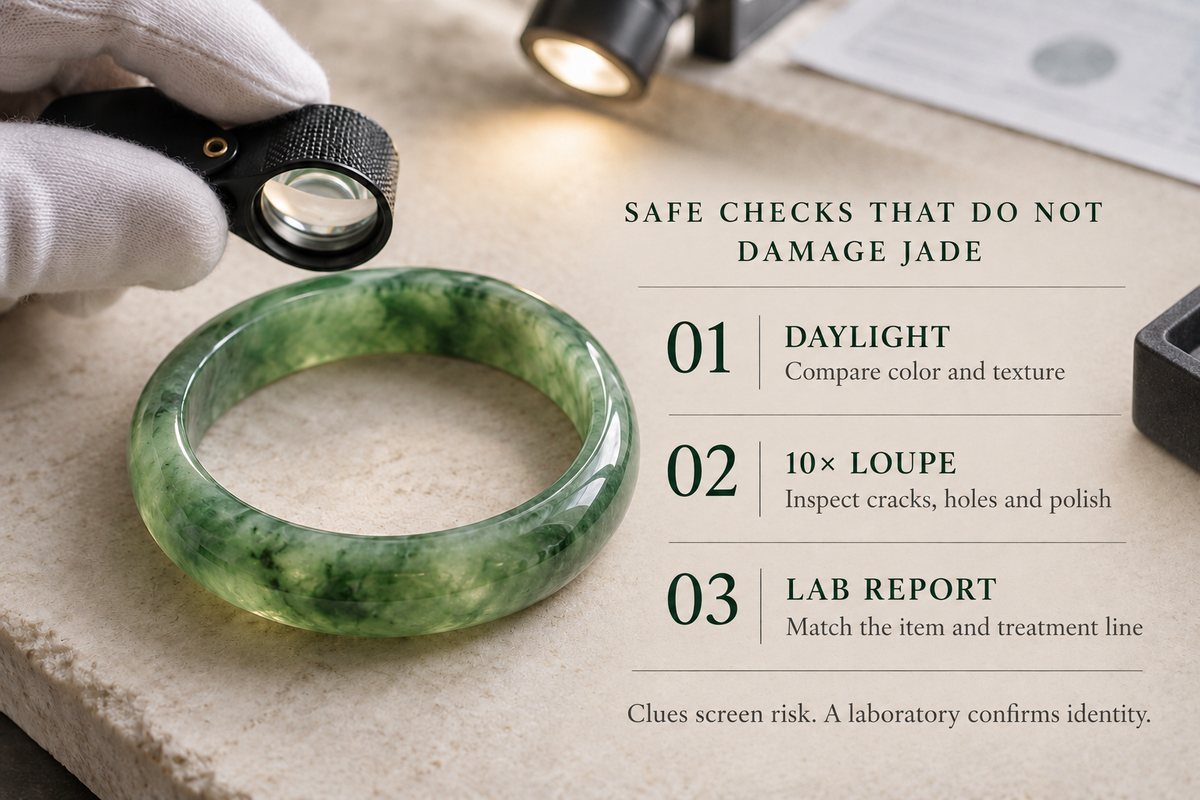
Compare the bracelet in daylight, inspect cracks and drilled areas with a 10× loupe, then match the item to a laboratory report. Only qualified testing can confirm identity and treatment.
Read the materials line one component at a time
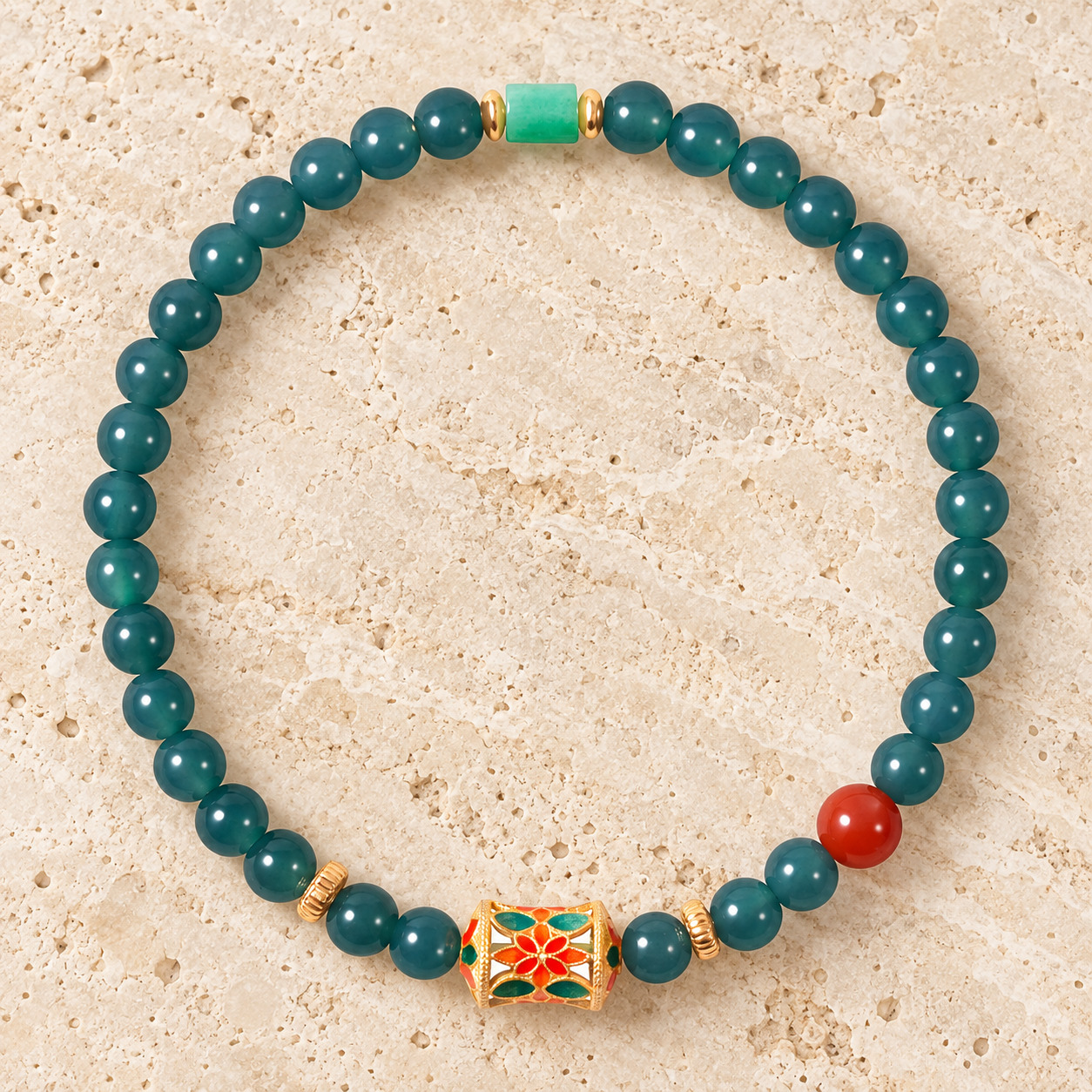
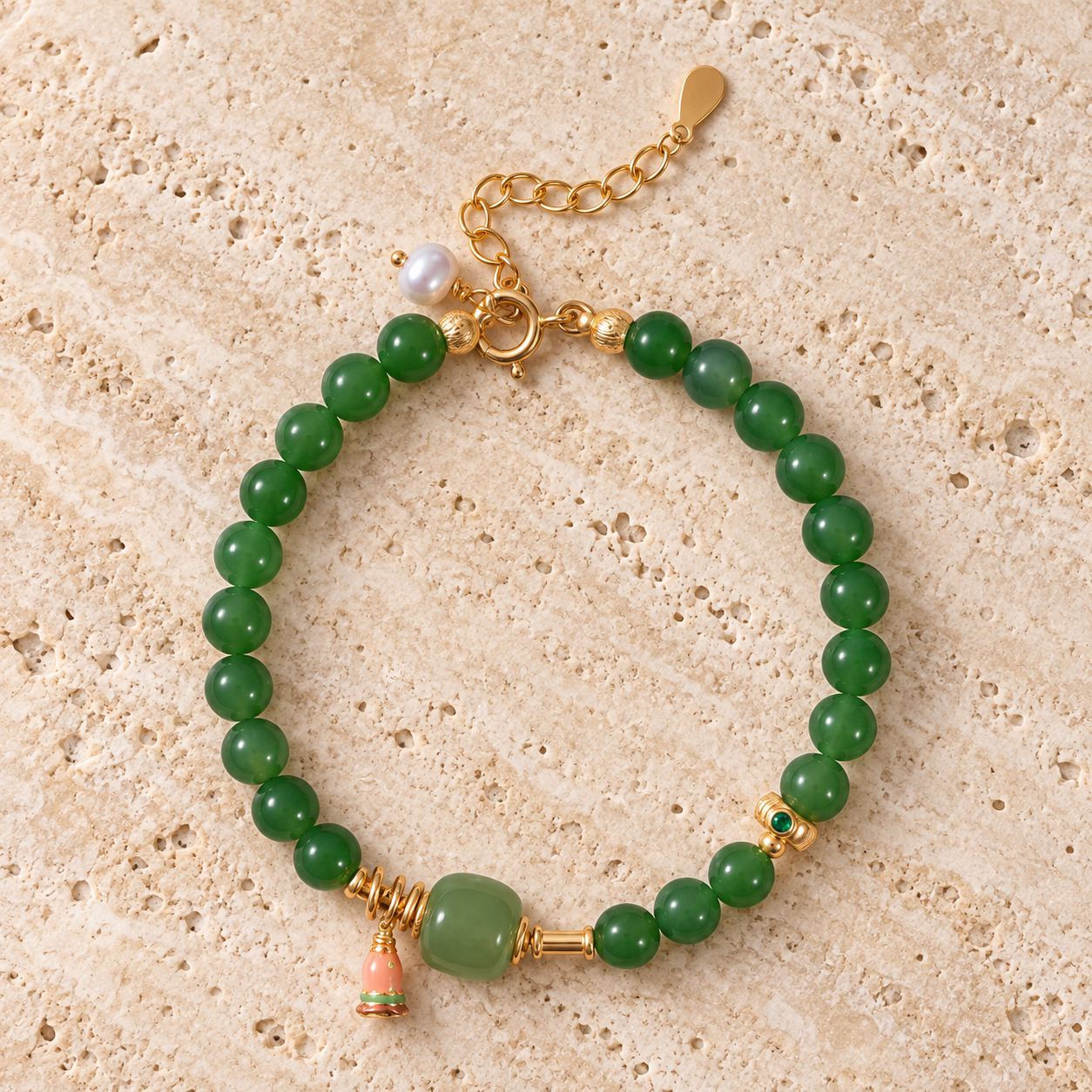
A mixed bracelet may contain jadeite beads, a Nanhong agate accent, enamel and gold-plated S925 silver. Another may combine Hetian jade with lapis lazuli and a separate jadeite disc. Those labels should not be collapsed into “all natural jade.” Each named component is a separate claim.
This is especially important with blue jewelry. Lapis lazuli is not blue jade. Enamel is not a gemstone. Gold-plated sterling silver is not solid gold. Clear material language does not prove treatment status, but it makes the product understandable and gives a laboratory or appraiser something precise to check.
Use photographs to check consistency, not authenticity
Ask for images of the actual bracelet in neutral light when the purchase is significant. Look for the same bead count, focal components, clasp and color placement shown in the listing. Close photographs of bead holes and edges can reveal chips, filled areas, concentrated color or rough finishing. These are reasons to ask questions; none proves by itself that the material is fake or treated.
Natural-looking variation is not automatic proof either. Glass and other imitations can be made with convincing clouds, streaks and color patches. Conversely, evenly colored jade is not automatically false. Appearance helps you notice contradictions. It does not complete the identification.
Type A, B and C jadeite in plain English
The A/B/C vocabulary is mainly used for jadeite treatment categories. It should not be treated as a universal grading scale for every object sold as jade.
| Trade term | What happened to the jadeite | What the term does not mean |
|---|---|---|
| Type A | Natural jadeite, untreated except for traditional surface waxing | It does not mean top color, flawless texture or high value |
| Type B | Acid-bleached and impregnated with polymer resin | It is not the same as an ordinary surface wax |
| Type C | Artificially dyed jadeite | The color should not be assumed natural |
| B + C | Bleached, polymer-impregnated and dyed | A vivid appearance does not disclose the process |
Type A is a treatment description, not a quality grade. An opaque, heavily fractured Type A piece can be less valuable than a finer example; color, transparency, texture, workmanship, size and damage still matter. When the item is nephrite, rely on the laboratory’s full identification and treatment wording rather than forcing jadeite shorthand onto it.
Five popular jade tests you should skip
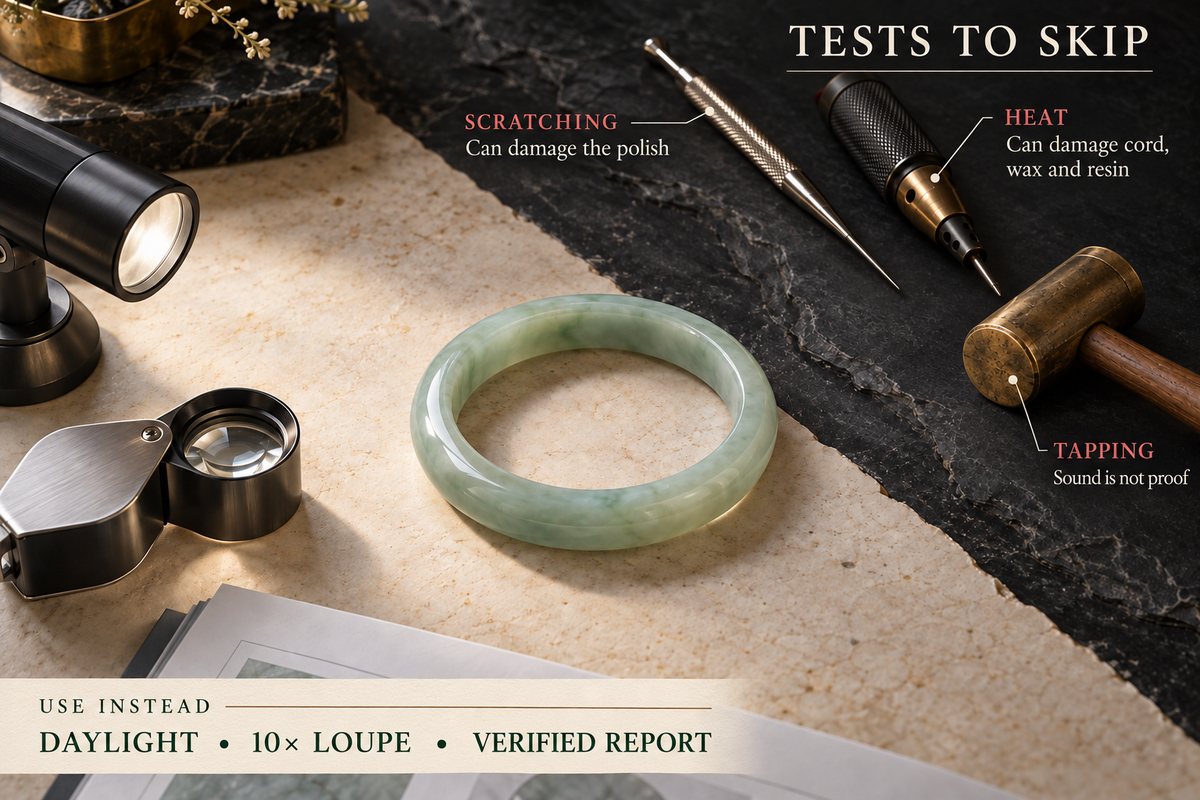
Scratching, heating and tapping do not prove that a bracelet is jade. Use daylight, magnification and a verifiable laboratory report instead.
Visual clues that are worth noticing
A clue becomes useful when it leads to a better question. It should never be converted into a verdict without supporting evidence.
Color collected in cracks or around bead holes
Color that appears unusually concentrated along fractures, pits or drilled holes can be consistent with dye. But natural color zoning can also follow mineral structures, and photographs can exaggerate contrast. Ask whether the color is natural and look for a treatment statement or report.
Air bubbles or mold seams
Rounded bubbles inside a transparent material or visible mold seams can suggest glass or another manufactured imitation. Their absence proves nothing: well-made glass may not show obvious bubbles, and jade can contain inclusions that look unfamiliar to an untrained eye.
Surface texture and polish
Jadeite can show a subtly granular texture, while nephrite often has a smoother, more fibrous-looking structure. Polymer, wax, dirt and polish can change the surface appearance. Texture is useful for comparison, but deciding the mineral species from a phone photograph is unreliable.
UV fluorescence
Strong fluorescence may raise a question about polymer, dye, wax, adhesive or another component. Not every treated jadeite fluoresces strongly, and a mixed bracelet contains materials that can react differently. UV is a screening observation, not a pass/fail test.
How to check a jade certificate
A certificate is valuable only when it is issued by a laboratory you can identify and clearly relates to the bracelet you are buying. A screenshot, copied logo or QR code is easy to reproduce. Verification requires matching the report to the physical item.
- Identify the laboratory. Find its official website, contact information and report-verification service. Do not rely on the QR destination printed by the seller until you confirm it belongs to the laboratory.
- Match the item. Compare the report photograph, object type, weight, dimensions, bead size and any identifying details with the bracelet in front of you.
- Read the identification exactly. “Jadeite jade,” “nephrite jade,” “serpentine” and “green glass” are different conclusions.
- Read the treatment statement. Look for wording about dye, bleaching, polymer impregnation, wax or whether no treatment was detected.
- Verify the report number on the laboratory’s own site. Confirm that the online result matches the paper or PDF, including the item photo and date where shown.
- Ask what was tested. For a multi-bead or mixed-stone bracelet, find out whether every jade component, a sample of beads or only the focal stone was examined.
- Understand the report’s limits. Identification is not automatically an appraisal of price, craftsmanship, durability, fit or every component in a mixed bracelet.
Questions to ask before buying a jade bracelet online
- What is the main material: jadeite, nephrite or something else?
- Has it been dyed, bleached, polymer-impregnated, waxed or otherwise treated?
- Are the photographs of the exact bracelet or a representative sample?
- Which parts are jade? Ask separately about focal beads, accent stones, spacers, charms and metal.
- Is there a laboratory report? If so, which laboratory issued it and what exact components were tested?
- Can the report number be verified online?
- What are the bead size, bracelet weight and wrist range?
- What is the return policy if the delivered piece does not match the description or report?
A seller who cannot answer every laboratory question may still be selling an attractive bracelet, but the product should be priced and described according to the evidence available. “No report” and “unknown treatment status” are honest answers. They are not the same as “certified untreated jade.”
How this applies to mixed-material bracelets
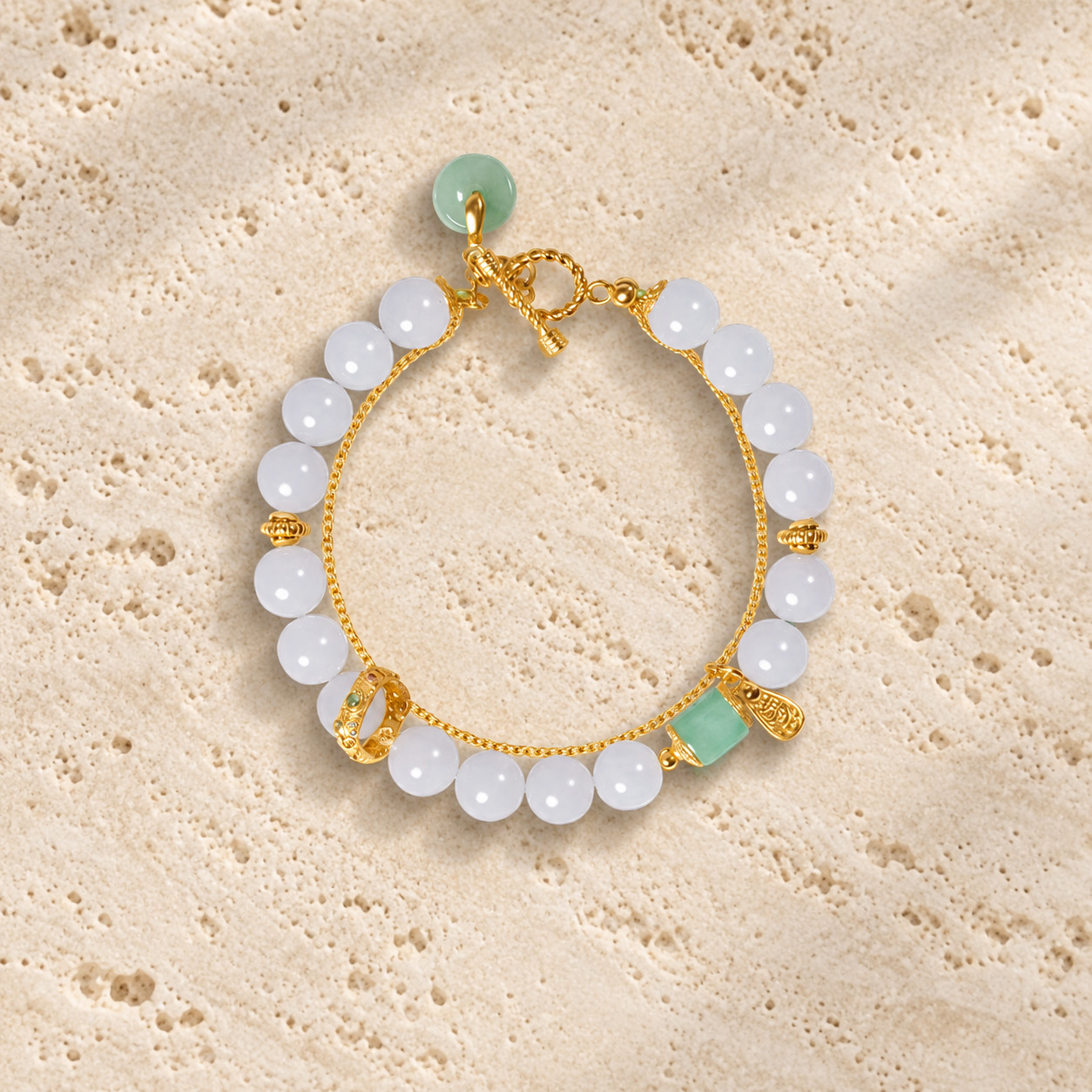
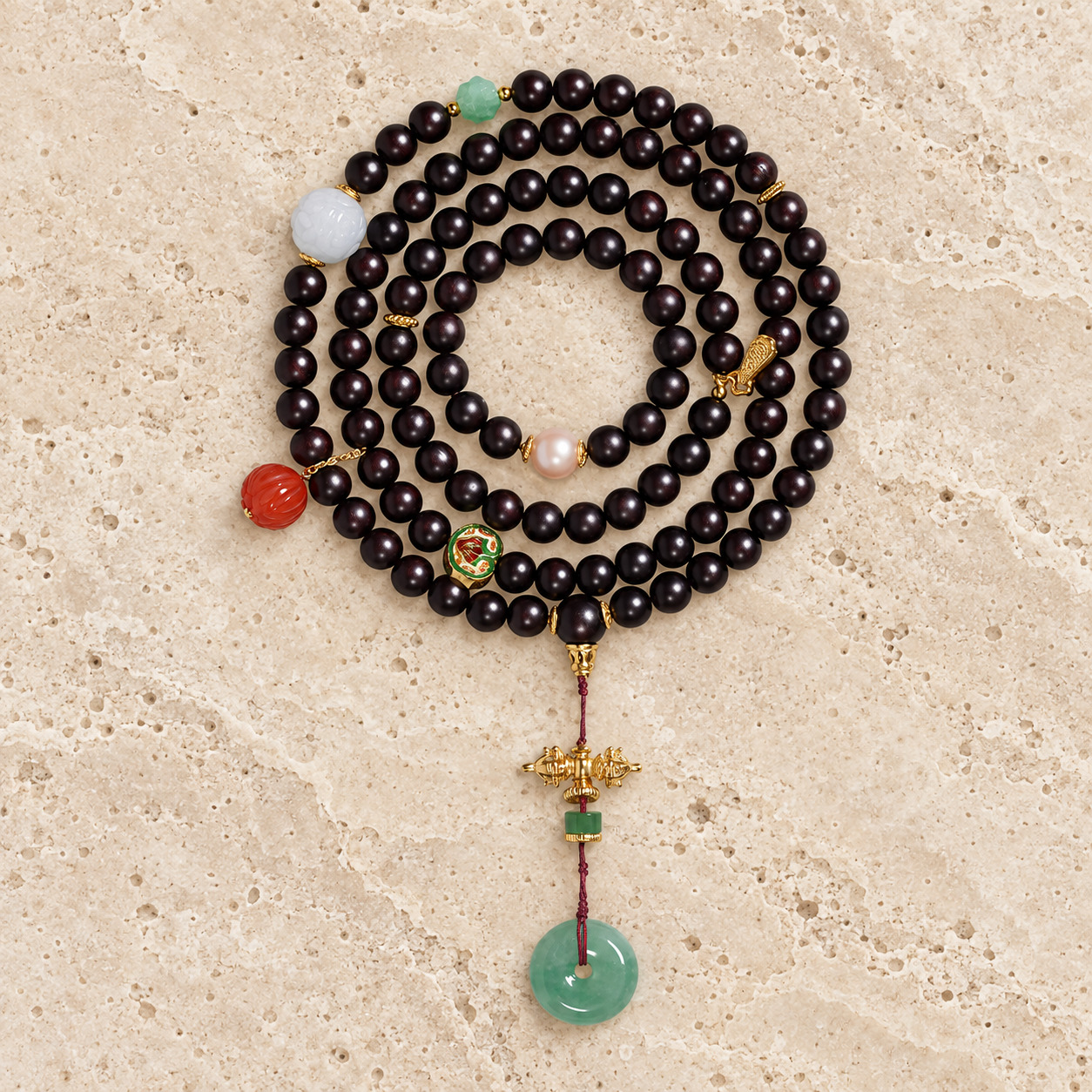
Most modern bead bracelets are not a single test subject. The strand may combine jadeite or nephrite with agate, lapis, amber, rhodochrosite, crystal, enamel, silver and elastic. A report for one focal jade bead does not automatically identify the rest of the strand.
Read a product page as an inventory. For example, a listing that names blue-water jadeite beads, a separate Nanhong accent, enamel and gold-plated S925 silver is clearer than calling the entire bracelet “jade and gold.” A Hetian jade bracelet with a carved lapis focal bead should identify the lapis separately. Precision helps you compare the description with the delivered piece and decide what, if anything, needs independent testing.
After confirming the material names, use our guide to jadeite and nephrite bracelets to compare how the two jade traditions differ in color, texture and design. For practical fit, bead size and wrist measurements, see the jade bracelet size guide.
Frequently asked questions
Can I tell whether a jade bracelet is real at home?
You can notice warning signs and check whether the listing is internally consistent, but you cannot reliably prove material identity and treatment status with ordinary home tests. A gemological report is the appropriate evidence when that distinction matters.
Does real jade always feel cold?
No. Jade often feels cool initially, but glass and many other stones can feel cool too. Room temperature, object size and how long you hold it change the sensation.
Is Type A jade the highest quality?
Type A describes jadeite that is natural and untreated apart from traditional surface waxing. It is not a grade for color, transparency, texture, workmanship or value.
What is Type B jade?
Type B is jadeite that has been acid-bleached and then impregnated with polymer resin. It is still jadeite material, but its treatment must be disclosed because it affects what the buyer is purchasing.
Can a jeweler identify jade by looking at it?
An experienced jeweler or gemologist may recognize useful features and obvious imitations, but subtle treatments and convincing substitutes can require laboratory instruments. An opinion by sight is not equivalent to a report.
Does a high price prove that jade is genuine?
No. Price is a seller’s decision, not a gemological test. Compare the asking price with the specificity of the material description, treatment disclosure, report and return policy.
Does one certificate cover every bead in a bracelet?
Not necessarily. Report scope varies. Ask whether the laboratory examined the complete bracelet, every jade component, a sample of beads or only one focal stone.
Should I scratch or heat jade to test it?
No. Scratch and heat tests can damage the polish, cord, wax, resin, plating or adjacent materials, and the result remains unreliable.
Gemological basis: Material and treatment descriptions in this guide follow the Gemological Institute of America’s jade overview, jadeite quality guidance, explanation of B jade and colored-stone reporting practices. A laboratory report should be read according to the issuing laboratory’s own terminology and scope.
Compare jade type, accent stones, metal, construction, size and care details before choosing a bracelet.
Jade bracelets with clearly listed materials