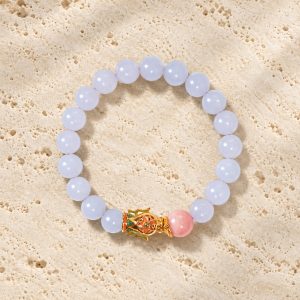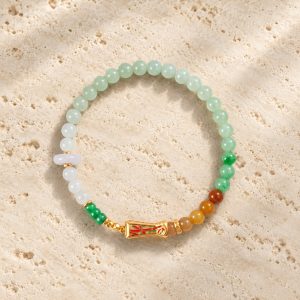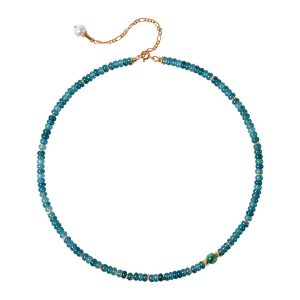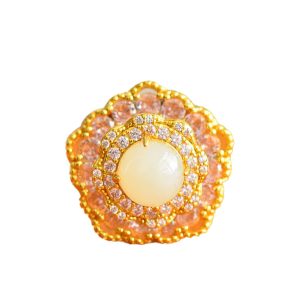
Jade is not one shade of green. Jadeite can appear green, white, lavender, yellow, orange-red, gray, brown and black, while nephrite commonly ranges through white, cream, celadon, green, brown and black. Each color has gathered cultural and personal associations—but color alone cannot identify the material, prove that it is untreated or determine what it is worth.
Green jade is commonly associated with growth, renewal and prosperity; white with purity and clarity; lavender with grace and reflection; yellow with warmth and abundance; black with strength and protection. These are symbolic readings, not gemological grades or promised effects. When buying jade, judge the actual stone by material identity, treatment, color quality, transparency, texture, condition, size and craftsmanship.
Swipe sideways to compare the complete color chart.
| Jade color | Common association | What the color may look like | What color cannot prove |
|---|---|---|---|
| Green | Growth, renewal, prosperity, vitality | Celadon, moss, apple, spinach or vivid emerald-like green | Jadeite, nephrite, natural color or value |
| White | Purity, clarity, restraint, a fresh beginning | Milky white, icy white, cream, gray-white or faint celadon | That it is nephrite, untreated or rare |
| Lavender | Grace, individuality, reflection, gentle affection | Pale lilac, gray-violet, pinkish lavender or smoky purple | Natural color or fine quality |
| Celadon / blue-green | Calm, balance, composure | Pale mint, gray-green, blue-green or watery green | Origin, species or treatment |
| Yellow / orange | Warmth, optimism, abundance, celebration | Pale honey, golden yellow, orange or reddish orange | Whether color is natural or surface-concentrated |
| Black | Strength, protection, steadiness | Jet black, charcoal, very dark green or mottled black-green | The exact mineral composition |
| Red / brown | Vitality, joy, grounding, continuity | Rust red, warm brown, reddish orange or weathered skin color | That the body color runs through the stone |
| Multicolor | Harmony, transition, individuality | Two or more naturally adjacent color zones | Rarity or value without checking quality and treatment |
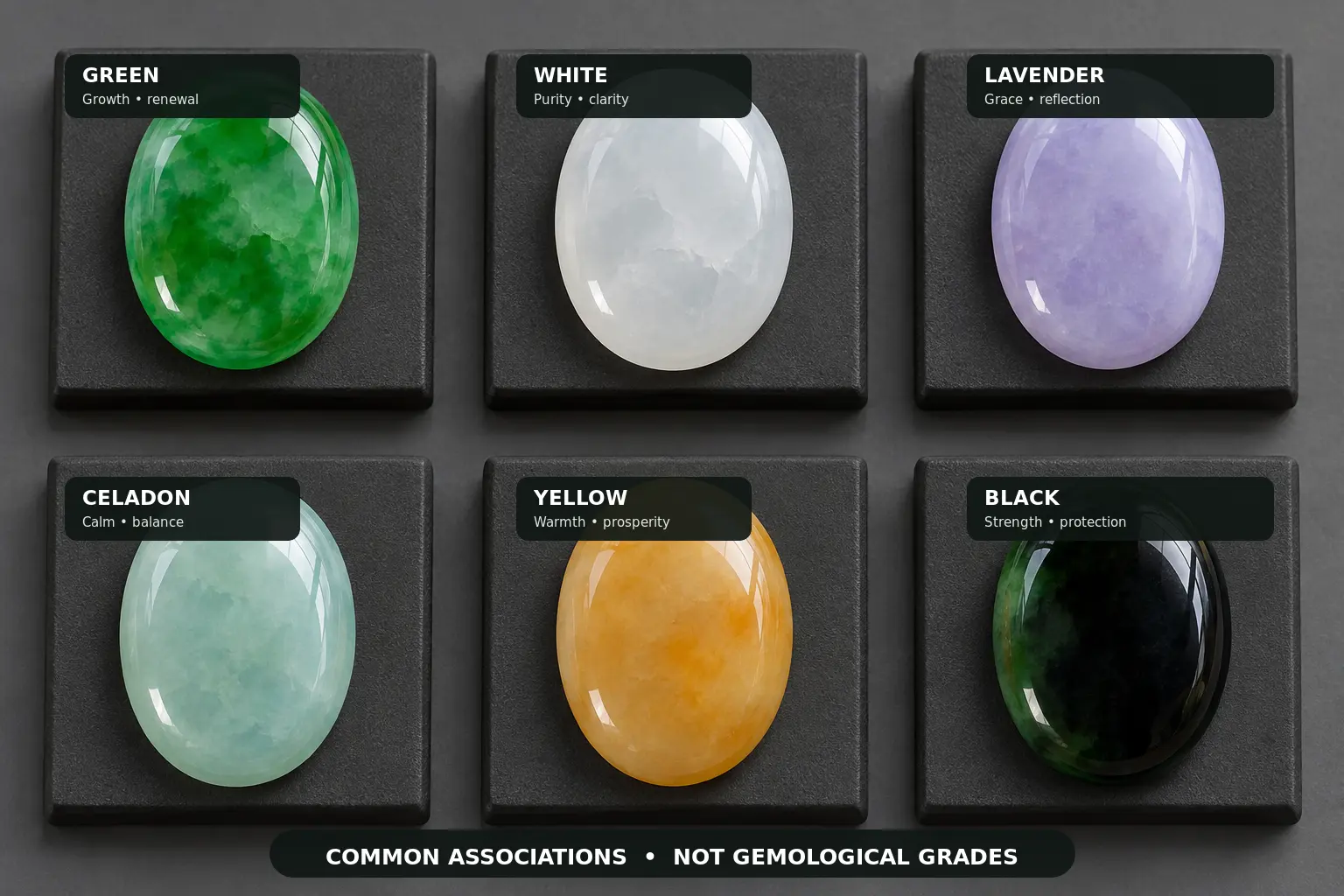
Green jade meaning: growth, renewal and prosperity
Green is the color most Western shoppers immediately connect with jade. In modern jewelry descriptions it is commonly associated with growth, renewal, vitality, prosperity and good fortune. In Mesoamerican art, green and blue-green jade could also evoke living breath, new growth, water and agricultural fertility. Meanings therefore depend on place and period rather than one universal rule.
Green is also the color most likely to be used carelessly in a listing. Jadeite, nephrite, omphacite, serpentine, aventurine quartz, dyed chalcedony and glass can all appear green. “Emerald green jade” describes appearance; it does not mean the stone is emerald, prove that the color is natural or establish an Imperial jade grade.
For jewelry, light to medium green often reads as easy and quiet, while a saturated green becomes the focal point from farther away. Mottling and color zones are not automatically defects: their value depends on how they work with transparency, texture, shape and the finished design.
White jade meaning: purity, clarity and restraint
White jade is often associated with purity, clarity, honesty, calm and a new beginning. Historical Chinese jade culture placed particular importance on fine white nephrite, and jade more broadly became connected with moral virtue and rectitude. That history should not be reduced to the claim that every white stone is more spiritual or more valuable.
White jade can be cool and translucent, milky, cream, gray-white or faintly green. Both jadeite and nephrite can occur in pale material. Quartz, calcite, serpentine and glass can also look similar, so “white jade” remains incomplete without a material identification.
On the body, white jade behaves like a neutral. Its polish, translucency, outline and metal setting become more noticeable because there is less color contrast. Yellow metal can make it appear creamier; polished silver can emphasize cool gray or pale celadon undertones.
Lavender jade meaning: grace, reflection and individuality
Lavender jade is often given modern associations of grace, reflection, individuality, gentle affection and emotional balance. These interpretations can make a lavender bracelet or necklace a thoughtful personal gift, but they are not scientific properties and should not be presented as guaranteed healing effects.
Lavender jadeite ranges from pale gray-violet to clearer lilac and pinkish purple. Photographs frequently intensify weak purple through cool white balance, high saturation or a strongly colored background. Ask for a neutral-light image and a second view against skin or a plain gray card before judging the tone.
Yellow, orange and red jade meaning: warmth and celebration
Yellow jade is commonly linked with warmth, optimism, abundance and steady confidence. Orange and red-orange colors are often connected with vitality, joy and celebration. In jadeite, yellow to reddish colors can occur near the weathered outer area of a piece of rough, while similar colors may also be produced or intensified by treatment.
A warm color is not automatically rarer than green, and darker does not automatically mean better. Look for whether the color is pleasing, well distributed and supported by a good polish. If the color affects the price, treatment disclosure matters more than an attractive name such as honey, golden or sunset jade.
Black jade meaning: strength and protection
Black jade is commonly associated with protection, strength, steadiness and clear boundaries. Some material marketed as black jade is actually very dark green when a strong light passes through it. Dark jade may be nephrite, jadeite-rich rock, omphacite-rich material or another stone entirely.
Because black hides surface and internal detail in ordinary photographs, listings should include close neutral-light views, a backlit view when appropriate and an exact material description. A flashlight may reveal color distribution, but it cannot establish identity or treatment.
Celadon and blue-green jade meaning: calm and balance
Celadon, watery green and blue-green jade are often associated with calm, balance, composure and quiet confidence. These names are especially inconsistent online: one seller’s celadon may be another seller’s pale green, gray-green or blue water.
Instead of buying the name, compare the actual photograph. Look at undertone, saturation, transparency, texture and how the color responds to neutral and warm light. If matching earrings or a bead necklace, compare the pieces together because small differences become more obvious in a pair or repeated strand.
Which jade color is the most valuable?
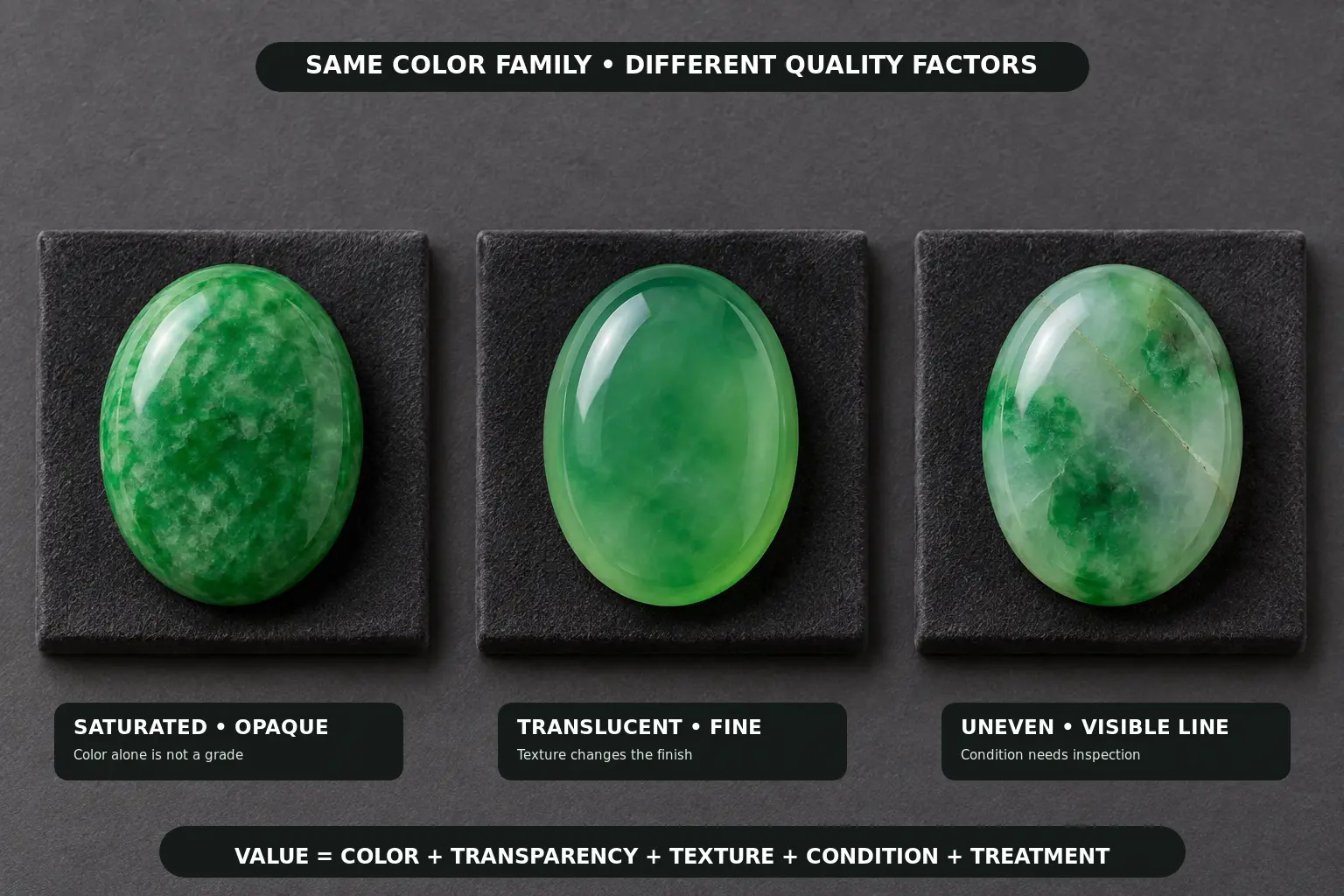
Fine, evenly distributed, vivid green jadeite with strong translucency and fine texture can command exceptional prices. That fact has produced a misleading shortcut: green equals valuable. It does not. A dull opaque green stone may be less desirable than a finely textured translucent white or lavender stone. Fine white nephrite has also held great historical and market importance.
Color is one part of value. For jadeite, color, transparency and texture are major quality factors. A buyer must also consider fractures and other condition issues, treatment, stone size, cutting, polish, matching, craftsmanship and reliable documentation. Color preference and market value overlap, but they are not the same question.
What jade color cannot tell you
- Species: green and white occur in both jadeite and nephrite. Some green omphacite can also fall within jade terminology in defined laboratory contexts.
- Authenticity: serpentine, aventurine quartz, dyed quartz and glass can imitate popular jade colors.
- Treatment: dye and polymer impregnation may alter appearance. Even color does not prove untreated material.
- Origin: a color cannot establish Myanmar, Guatemala, China, Canada or any other geographic source.
- Value: color must be assessed with transparency, texture, condition, treatment, size and workmanship.
- Guaranteed effects: symbolic meaning does not establish a medical, financial or spiritual outcome.
For a detailed material comparison, read jadeite, nephrite and common jade look-alikes. The examples use ring stones, but the identification principles also apply to loose cabochons, pendants, beads and earrings.
How to compare jade color in an online listing
- Start with neutral light. Look for a daylight or neutral-white photograph without a strongly colored background.
- Request more than one angle. A domed cabochon, bead or carved pendant can show different color from the front, side and back.
- Check white balance. Use skin, gray card, silver metal or another familiar neutral object as a visual reference.
- Separate color from species. The listing should state jadeite, nephrite or another material—not only green jade or white jade.
- Read treatment disclosure. Ask whether dye, bleaching, polymer impregnation, coatings or other treatments were detected.
- Compare exact dimensions. A larger face and taller dome can appear more colorful simply because light travels through more material.
- Match any report to the item. Check the report number, item description, dimensions or weight against the piece offered.
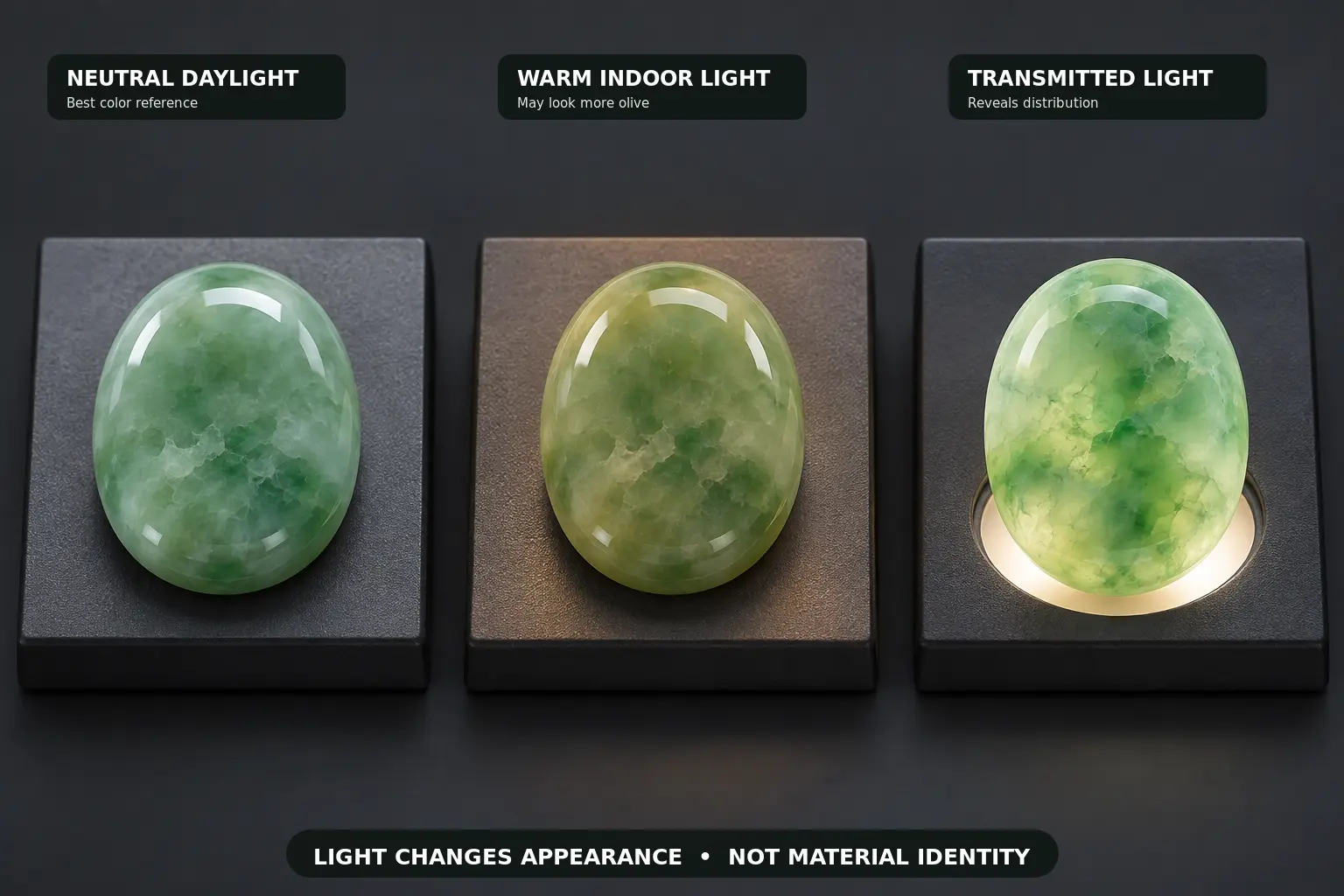
Ask for one front view in neutral light, one side or back view and one photograph beside a ruler or caliper. A warm indoor photograph is useful as a second reference—not as the only color image.
Choosing a jade color for the jewelry you will wear
Bracelets
A strand repeats the color across the wrist, so bead matching and overall rhythm matter. A bangle shows a larger continuous area, making veins and color zones more visible.
Necklaces
Jade sits near the face and neckline. Green and lavender make a clearer color statement; white and celadon work more quietly with different clothing colors.
Earrings
Judge the pair together. Exact matching is not required, but obvious differences in tone, transparency, size or weight should look intentional.
Rings
A ring receives strong close-up attention and more daily impact. Color matters, but setting height, edge protection, fit and condition matter just as much.
If you are deciding between two ring colors, see the practical comparison of a green jade ring and a white jade ring. For symbolic gifting, continue with the guides to jade bracelet meaning and jade necklace meaning.
How to use color meaning when giving jade
The most useful meaning is the one you can explain honestly to the recipient. Green can mark growth, a new job or a new chapter. White can suit a message about clarity or a fresh start. Lavender can feel personal and distinctive. Yellow can carry warmth and celebration, while black can express strength and steadiness.
A short card is better than a supernatural promise: “I chose green for the growth ahead,” or “I chose white because it reminded me of your calm style.” The message remains meaningful without claiming that the jewelry will create luck, cure anxiety or protect someone from physical harm.
Frequently asked questions
What is the luckiest color of jade?
Green is the color most often linked with prosperity, renewal and good fortune in modern jade jewelry. “Luckiest” is a cultural or personal interpretation, not a measurable gemological property.
What is the rarest jade color?
There is no useful rarity ranking based on color name alone. Fine vivid green jadeite is famously scarce and valuable, but exceptional lavender jadeite and fine white nephrite can also be rare. Transparency, texture, size, treatment and condition must be compared.
Does darker green jade mean better quality?
No. Dark green may be saturated but opaque or uneven. A somewhat lighter stone with stronger translucency and finer texture may be more desirable.
Is white jade always nephrite?
No. Both jadeite and nephrite can appear white or near-white, and several non-jade materials can imitate the appearance.
Is lavender jade naturally purple?
Natural lavender jadeite exists, but purple color can also be dyed or exaggerated by photography. Ask for treatment disclosure and neutral-light images; obtain a qualified laboratory report when the price warrants it.
Why does my jade look different indoors?
Warm indoor bulbs shift green toward olive and can make white jade look creamier. Camera white balance, nearby colors, background and backlighting also change the appearance.
Can jade color prove that a piece is real?
No. Color is useful for describing appearance, but it cannot establish species, natural color or treatment. Identification requires appropriate gemological testing.
Use jade color meaning to choose a message and a style—not to identify or grade the stone. Green, white, lavender, celadon, yellow and black can all be beautiful. The stronger purchase decision combines the color you enjoy with exact material disclosure, treatment information, neutral-light photographs, dimensions, condition and workmanship.