
From rough jade to a piece made to be worn
I choose, open, shape and finish jade by following the material in front of me. The work is slow because the important decisions happen before the jewelry looks like jewelry.
I start with the stone, not a fixed drawing
Most mornings in Sihui, I begin with a rough stone, a strong lamp, a pencil and a small cup of water.
My name is Adrian. I make jade jewelry and write the jade guides published on LuckJade. The finished piece may be a bracelet, pendant, ring or pair of earrings, but the process begins in the same way: I slow down and look.
Sihui is a jade-working city. Rough material, cutting workshops, carving benches, polishers and traders sit close to one another. That makes it possible to compare stones, discuss a cutting plan and check the result at different stages instead of treating production as one invisible step.
The jadeite rough I use originates from Myanmar and reaches Sihui through established trading channels. I do not choose a stone because a small green patch looks exciting. Surface color is only one clue. A useful piece of rough must also offer enough sound material for the intended shape.
That is why the first part of my work rarely looks dramatic. I wet the surface, turn the stone under angled light, check visible openings and mark possible lines. Some decisions take longer than the cutting itself.
A rough stone is a set of questions
I cannot see the entire interior before the stone is opened. What I can do is collect evidence and avoid pretending that one clue tells the whole story.
After the rough is opened, I clean and wet the new surface. Color that looked strong from the outside may become shallow. A quiet section may reveal finer, cleaner material. A line that appeared harmless may continue farther than expected.
At this point I draw the plan again. A broad, even section might support a pendant. A narrow vein of stronger green may be better used for a ring face or a small carved element. Several related sections may become matching beads.
Making the largest possible object is not my goal. If a smaller form keeps the best color and avoids a weak area, the smaller form is usually the more honest decision.
Seven stages from rough to finished jewelry
Read and mark
I record the visible color, texture, openings and lines, then mark more than one possible cutting direction before choosing the safest plan.
Open the rough
The first cut exposes the interior. Water clears the surface so color, grain and fractures can be checked again under light.
Separate usable sections
I divide the material around strong color and sound structure. A single rough may provide one main piece and several smaller elements—or only one usable section.
Draw for the material
The outline follows the best part of the stone. I decide the front, back, thickness and orientation before committing to fine carving.
Shape and carve
Rough grinding establishes the form. Finer work develops edges, curves and details. Material is removed gradually because it cannot be put back.
Sand and polish
Successively finer abrasives remove tool marks. Polishing reveals the surface the material can naturally take; it does not turn every jade stone into the same glassy finish.
Assemble and inspect
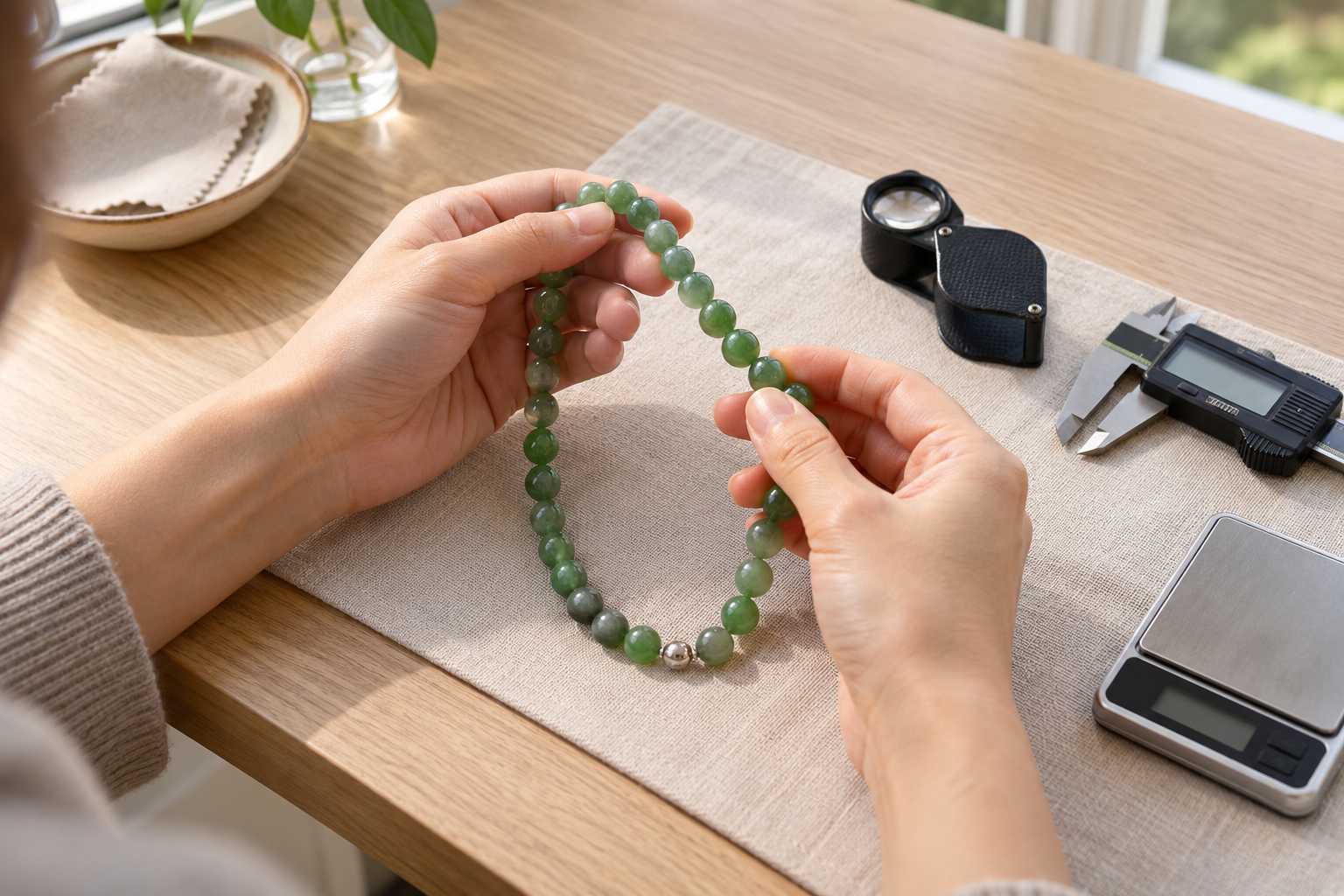
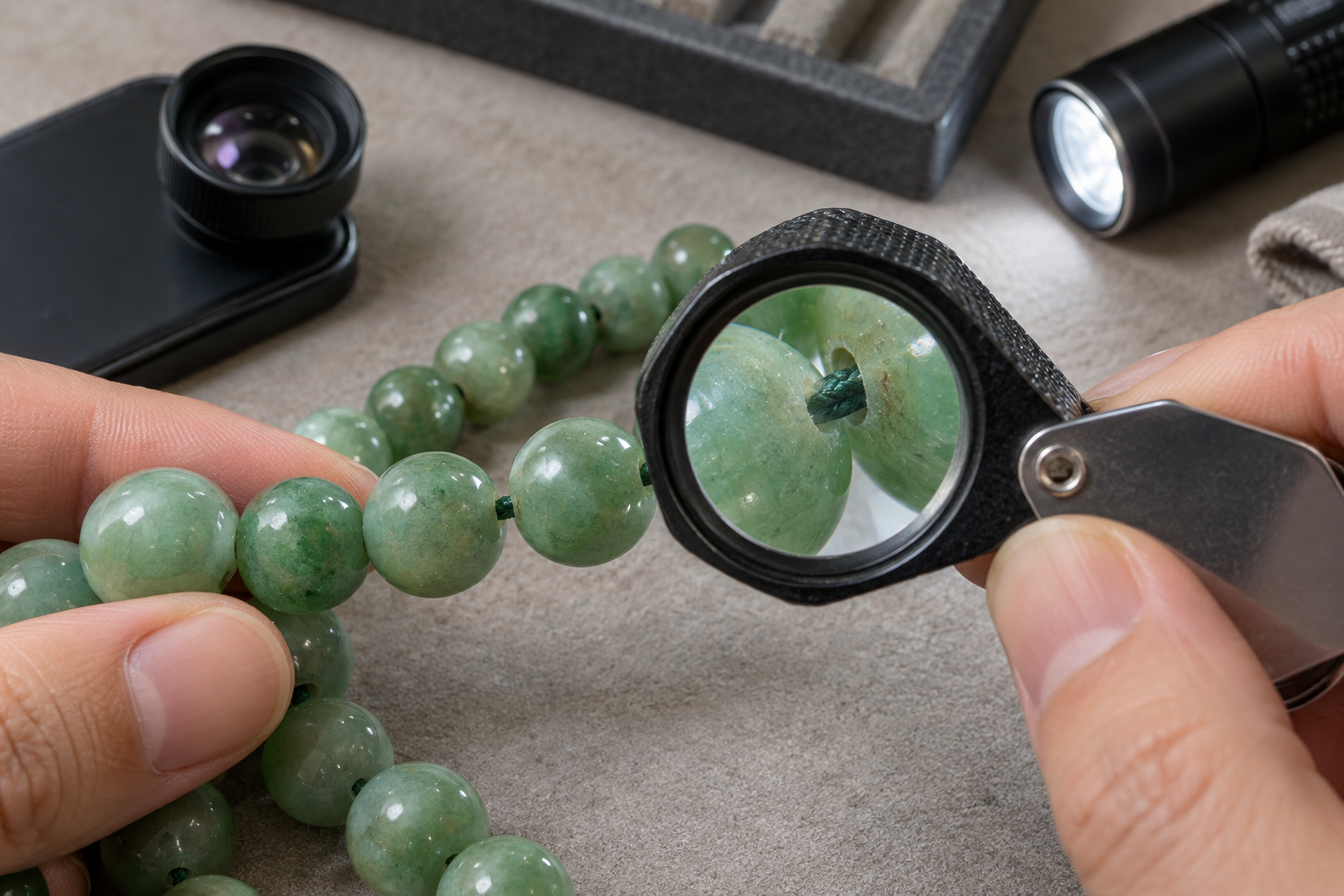
I check drill holes, settings, cords, clasps, weight and balance. The finished piece must work on a wrist, neck, ear or hand—not only look good on a table.
Different jewelry asks for different decisions
A good stone can still become uncomfortable jewelry if proportion and construction are ignored.
Consistency without pretending the beads are identical
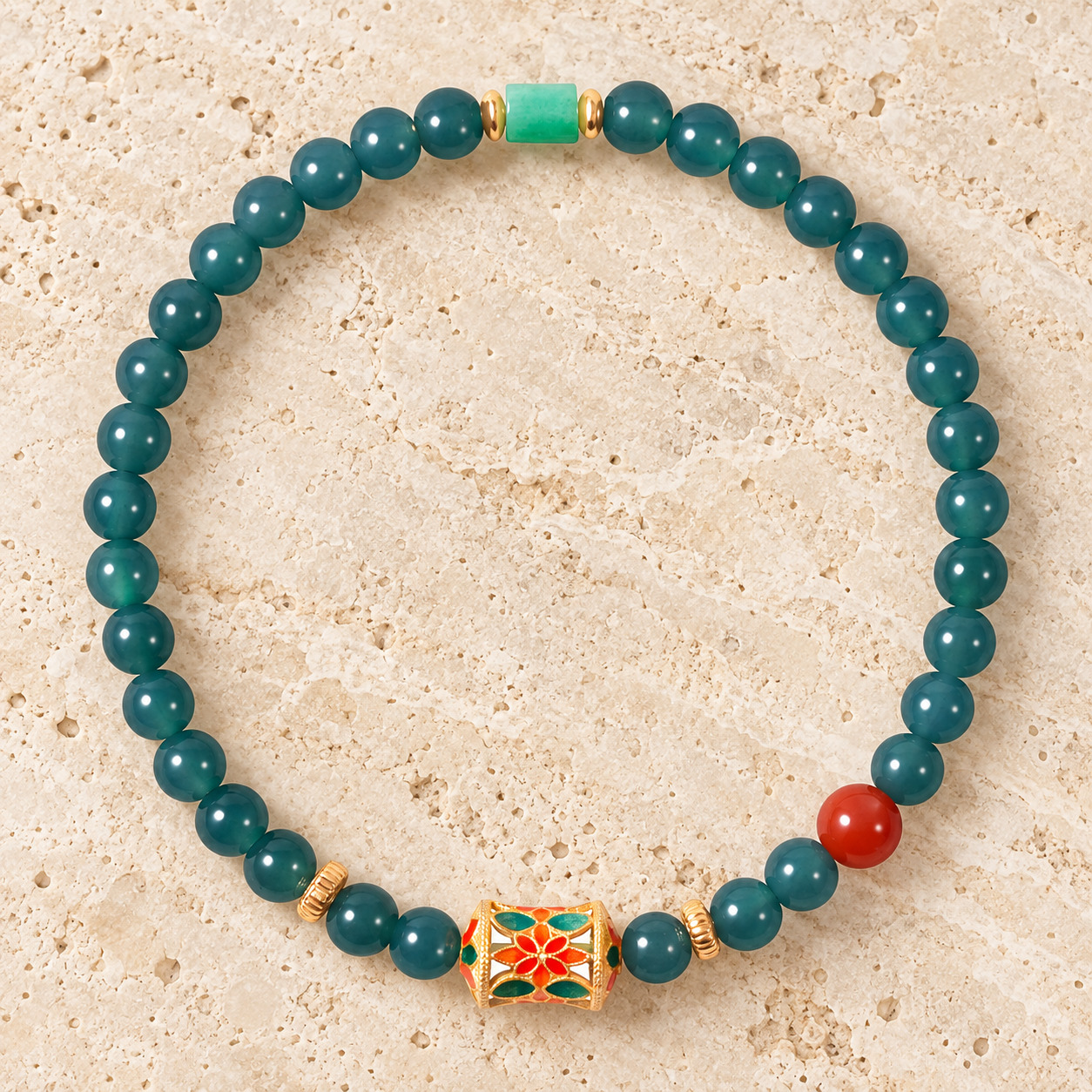
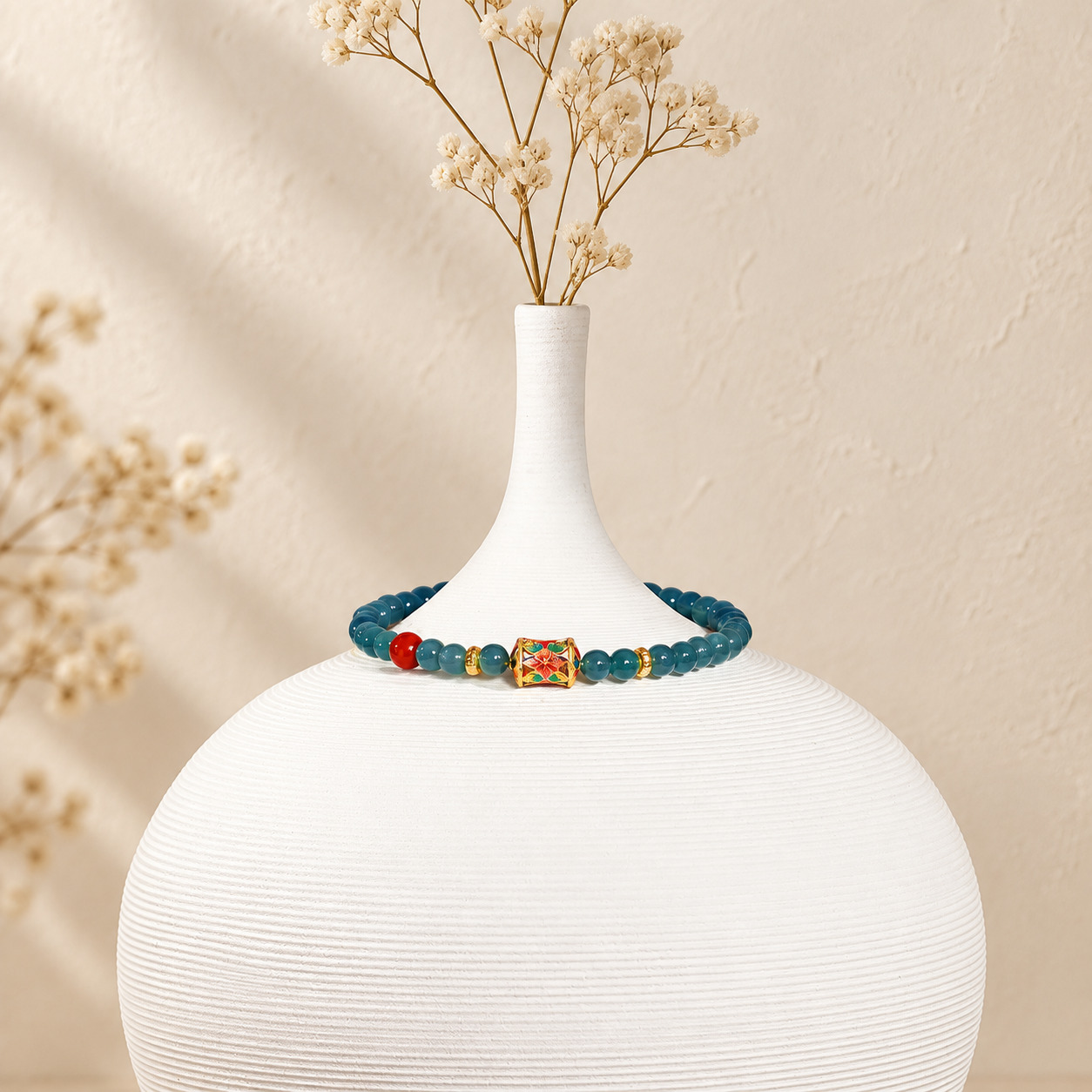
I compare diameter, roundness, drill-hole position and the transition between neighboring colors. Cord tension must allow movement without leaving the bracelet loose and uneven.
Direction, thickness and hanging balance
The strongest color should face outward. The bail or cord position must support the center of gravity so the pendant does not constantly turn. Thickness matters for both strength and weight.
Protection around a small area of jade
A ring receives knocks during ordinary use. I consider the height of the jade, exposed edges and how the setting protects the stone without hiding too much of it.
A pair must be judged together
Color, translucency, size and movement need to feel related on both sides. Weight is just as important as appearance because an attractive pair should still be comfortable to wear.
The workshop should not disappear when the product goes online
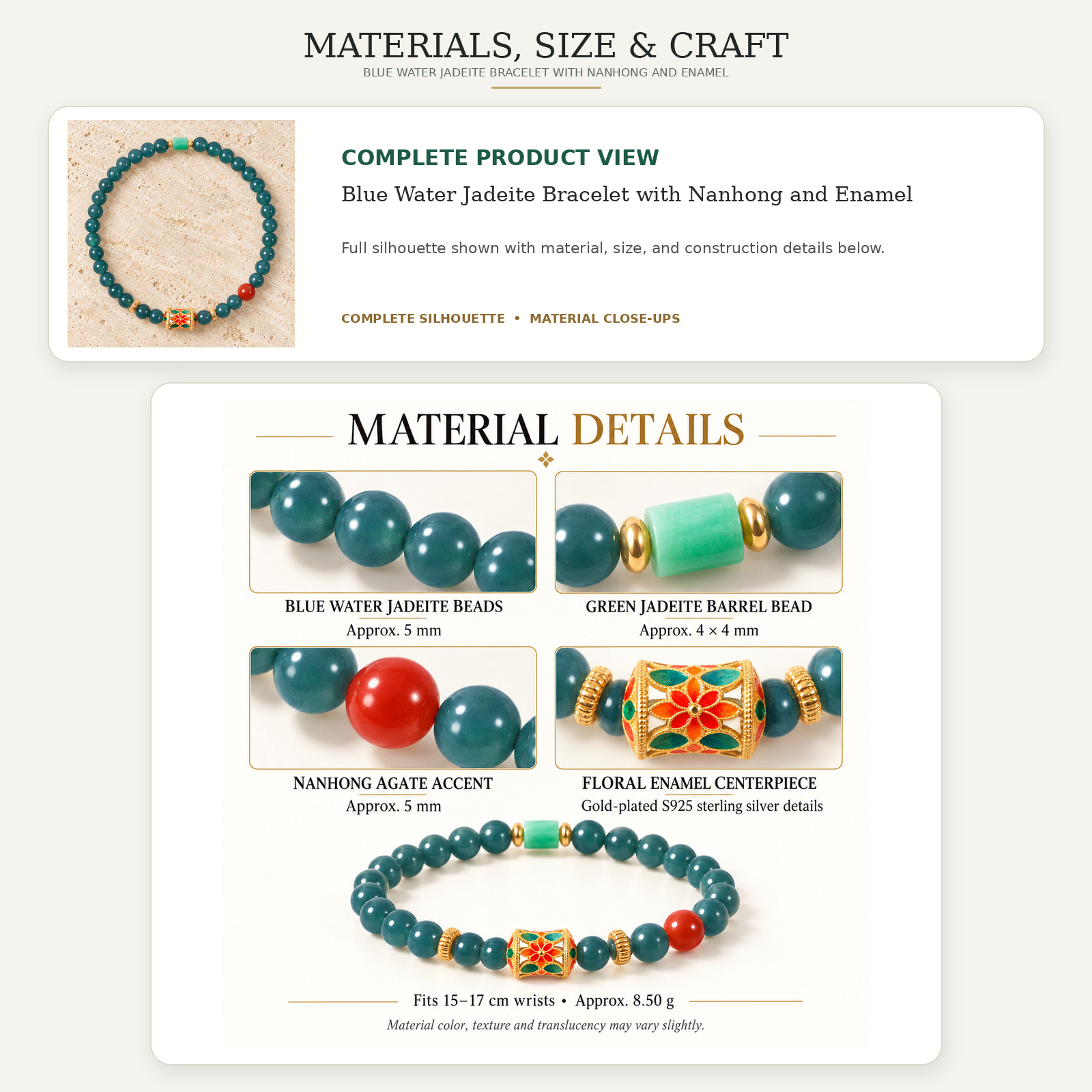
Close-up photographs can make a small bead look large. Screens can shift color. A polished surface can hide scale and construction. That is why I want LuckJade product pages to explain the information that normally stays at the workbench.
I do not try to make natural jade look factory-identical
Jade may contain pale areas, deeper color, fine mineral lines or cloudy transitions. Some lines affect strength and must be avoided. Others are stable features of the stone.
I want the surface to feel smooth, the structure to be dependable and the proportions to work on the body. I do not expect two natural stones to show exactly the same pattern.
That difference is not a reason to avoid clear standards. It is a reason to photograph the actual piece carefully, give useful measurements and describe what a customer may see when the jewelry arrives.
When treatment, origin or value needs formal confirmation, appearance and photographs are not enough. An independent gemological report is the stronger form of evidence.
A blessing can be sincere without becoming a promise
I cannot carve luck into a stone, and I will not tell a customer that jewelry guarantees wealth, health or protection. But jade has long been given at birthdays, weddings, new beginnings and ordinary moments when one person wants to wish another person well.
Before a piece leaves, I check the finish and the way it wears. Then I send it with the same simple thought I would offer a friend.
— Adrian
The stone gives the design its direction. The person who wears it gives the piece its meaning.
LuckJade brings the material, the decisions made at the workbench and the practical information a customer needs into the same place.
Adrian · Jade artisan and founder of LuckJade · Sihui, China